Summer’s abundance is in full display in our Ornamental Kitchen Garden, where colorful tomatoes, squashes, herbs, and greens approach their peak this month. Harvested daily, these fresh ingredients are delivered straight to our 1906 restaurant, where the culinary team transforms them into vibrant dishes that celebrate the flavors of the Brandywine Valley. As the 1906 menu reflects the rhythm of the garden, it evolves constantly throughout the season. Favorites like crudité and tomato gazpacho change as new produce ripens just steps from the kitchen—and offer a refreshing way to experience the flavors of summer at home. For a closer look at what brings these dishes to life, read on for the at-the-minute recipes, techniques, and garden-to-table collaborations behind each plate, as shared by 1906 Executive Chef George Murkowicz.
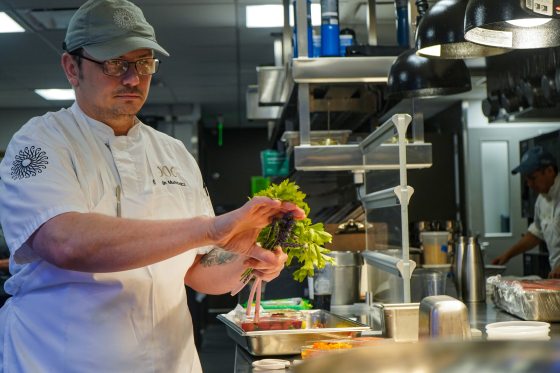
1906 Executive Chef George Murkowicz preps freshly picked produce for a crudité platter. Photo by Meghan Siano.
Across 1906’s early summer menu, seasonal produce takes center stage. From the scialatelli with peas, beans, and rainbow chard to the ocean trout with summer squash and baby fennel, the menu celebrates peak produce, and for very good reason.
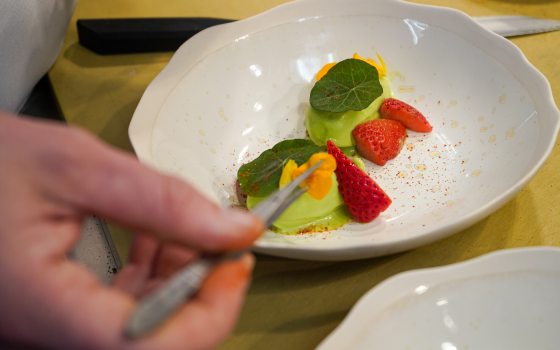
Embodying the flavors of summer particularly nicely, the tomato gazpacho utilizes fresh tomatoes and peppers that are blended until fine. Once chilled, it’s poured over a nasturtium sorbet that’s topped with fresh-picked flowers, strawberries, and nasturtium leaves—which features a bold, peppery taste
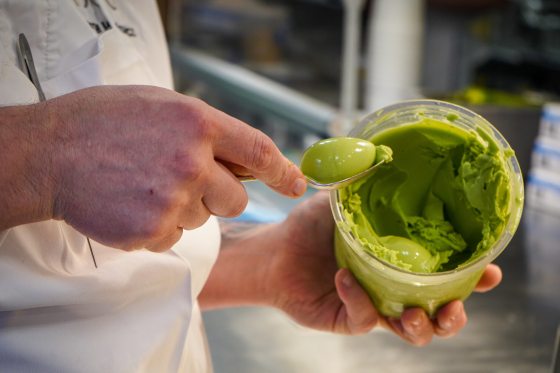
To create the sorbet’s smooth texture, the culinary team uses a Pacojet, which micro-purees frozen ingredients into ultrafine sorbets or sauces. Photo by Meghan Siano.
The resulting dish tastes remarkably like summer. One bite highlights sun-ripened tomatoes, the next introduces the spicy herbal notes of the nasturtium, and another is full of the sweetness of fresh strawberries. “Topping the gazpacho with sorbet keeps it cool while adding another layer of flavor,” shares Murkowicz.
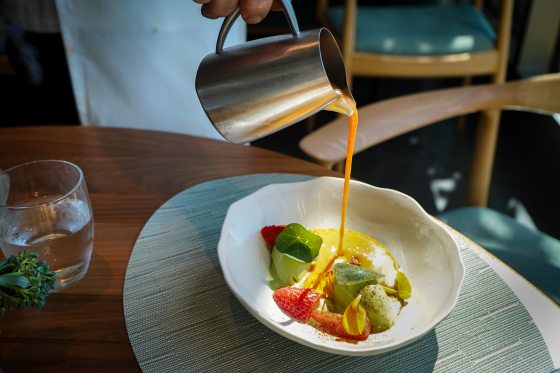
The gazpacho tastes just as bright and layered as it looks. Photo by Meghan Siano.
The same ingredients that lend depth and brightness to a summer gazpacho can shine just as beautifully on a crudité platter. At their peak, fresh from our garden vegetables need very little embellishment. Murkowicz suggests seeking out the freshest seasonal offerings from your own garden or local farmer’s market and then letting their colors, flavors, and textures shine.
“Freshly harvested vegetables bring the sweetest flavors and crispiest textures, so serve them when they are still warm from the sun in the garden or on ice for a chilled presentation,” he shares.
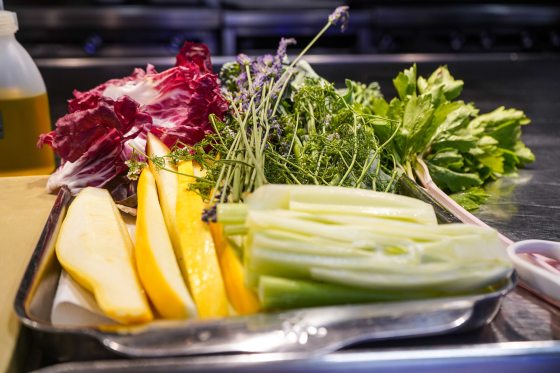
Choose vegetables that add dramatic color, height, and texture to crudité. Try fennel, purple cauliflower, squashes, radish, raw beets, or other seasonal favorites. Arrange them generously and let the ingredients speak for themselves. Photo by Meghan Siano.
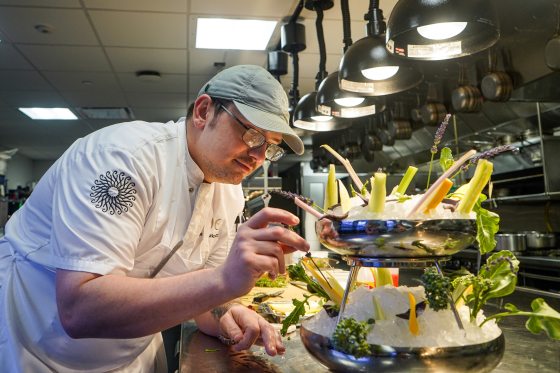
Murkowicz arranges produce to let the ingredients speak for themselves. Photo by Meghan Siano.
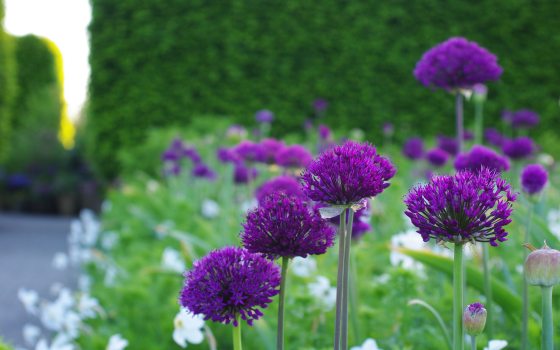
Even spring harvests continue to shape our summer crudité thanks to some thoughtful preservation. The centerpiece of the crudité, the allium dip, takes nearly a year to go from planning to planting to harvest.
“This spring we had an incredible abundance of alliums,” Murkowicz said. “There were troves of garlic chives, spring onions, garlic scapes, and scallions. Since plants only bloom for so long and rather than using everything during a brief window of time, we plucked all the purple chive blossoms and then dehydrated them so that we can use them throughout the seasons in our allium dip.”
In June 2025, our horticulturists selected garlic bulbs and bulbing onions like ‘Walla Walla’ for fall planting in the Ornamental Kitchen Garden. The team then pulled those whole garlic plants in early April 2026 and delivered them to the kitchen, where our chefs used them as sturdy green onions and leeks in certain dishes. By late May, the horticulturists removed the flower scapes from hardneck varieties such as ‘Rose du Var’ and ‘German White to encourage larger bulb development. Depending on the time of harvest, those alliums were then transformed into powders, dehydrated flowers, or carmelized onions, for the allium dip featured on our midsummer menu (and the recipe is below!).
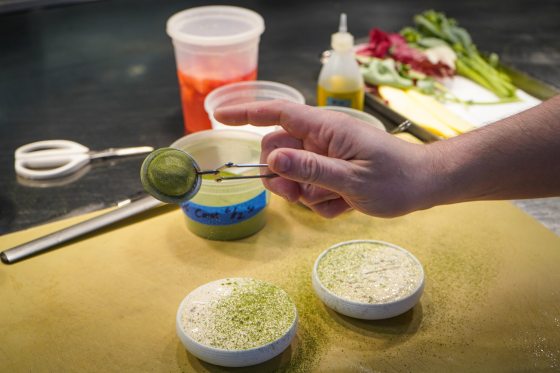
In the kitchen, chefs gently tap dehydrated alliums over the dip for a colorful finishing touch. Photo by Meghan Siano.
This roots-to-stems approach in the Ornamental Kitchen Garden guides the collaboration between the garden and the kitchen, helping 1906 maximize flavor while minimizing food waste. Throughout the year, our chefs and horticulturists brainstorm which seeds and bulbs to start, choosing varieties that offer both horticultural beauty and culinary potential. This year, 330 different edible varieties were grown from seed and used in 1906 dishes.
“We think of the Ornamental Kitchen Garden as a fresh pantry,” shares Longwood Senior Horticulturist Alex Correia. “Even petals and seeds contribute color, flavor, and texture to dishes. By transforming flowers and foliage into colorful powders and herb salts or baking root vegetable chips and preserving flavors and textures through sauces and ferments, we continue to extend our harvests in so many ways.”
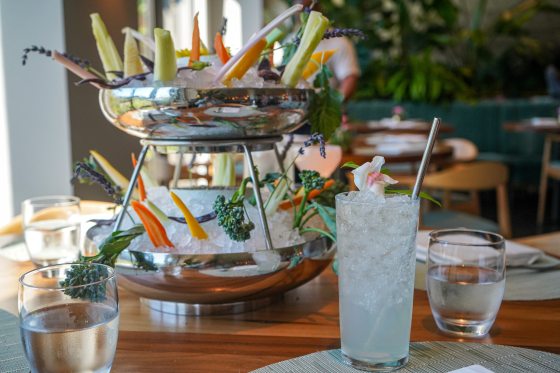
Our 1906 midsummer garden crudité, straight from our Gardens. Photo by Meghan Siano.
From a vibrant crudité board with a delicious allium dip to a cooling gazpacho, these dishes are a reminder that summer’s simplest pleasures begin in the garden and then make their way to the kitchen. Follow these recipes to make the most of your own garden harvest and join us at 1906 for fantastic, fresh garden-to-table selections all summer.
French Allium Dip Recipe
Yield: Approximately 5 cups
2 pounds white onions
4 tablespoons butter
1 tablespoon Montreal steak seasoning (store-bought or recipe below)
1 tablespoon salt
1 tablespoon chives, minced
1 quart full-fat sour cream
Method
- Peel and julienne onions. Slice onions into long, thin, matchstick-like strips from root to tip. This shape ensures the onion cooks evenly and prevents onions from turning to mush.
- Caramelize onions. In a thick bottomed skillet, melt butter over medium heat and add onions. Sprinkle with salt. Caramelize onions over low heat, stirring occasionally, until a rich, deep, caramel color is reached.
- Puree onions. While hot, puree onions in a food processor till smooth.
- Cool onion puree in refrigerator.
- Make the dip. Combine onion puree, sour cream, and seasonings. Don’t be afraid to add more salt if desired. Salt brings out the other flavors beautifully!
Montreal Steak Seasoning
1 tablespoon paprika
1 Tablespoon black pepper
1/2 tablespoon garlic powder
1 tablespoon onion powder
1 tablespoon ground coriander
1 tablespoon dill
Red chili pepper flakes to taste
Mix all ingredients together.
Watermelon Tomato Gazpacho Recipe
Yield: Approximately 3 quarts
4 large heirloom tomatoes
1/4 watermelon
1 red bell pepper
1 fennel bulb
6 garlic cloves
1/2 jalapeno
2 cups strawberries
1 cucumber
1 tablespoon salt
¼ teaspoon black pepper
1/2 cup sherry vinegar
1 cup extra virgin olive oil
2 cups canola oil
Method
- Prep vegetables. Remove seeds from peppers and jalapenos, tops from strawberries, and stem ends from tomatoes, fennel, and cucumbers. Chop all produce into about 1-inch chunks and combine in a large bowl.
- Season and marinate overnight. Add vinegar, oils, salt, and pepper, mixing thoroughly and allow to marinate overnight in refrigerator.
- Blend into gazpacho. Blend on high speed in a food processor until smooth and creamy.
- Finish. Taste, and freely adjust salt and vinegar until you reach the happy balance for your palette! Add a scoop of sorbet (lemon, strawberry, or watermelon will pair nicely) when serving to keep gazpacho chilled.
Editor’s Note: Download a print-ready PDF of these recipes here. We look forward to welcoming you to 1906. Advance reservations recommended.