House & Theater District

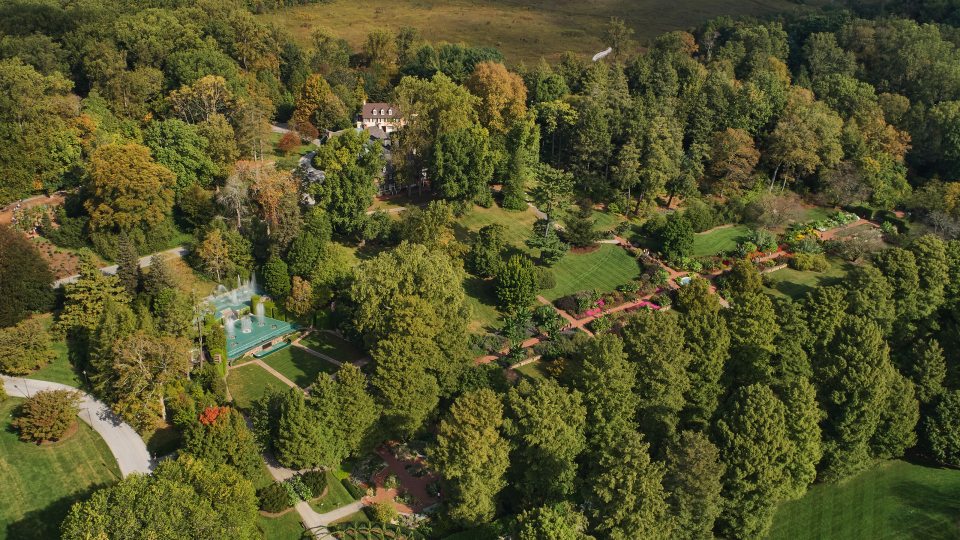
Aerial view of house and theater gardens filled with trees, a small fountain garden, and brick house

The story of Longwood Gardens begins here.

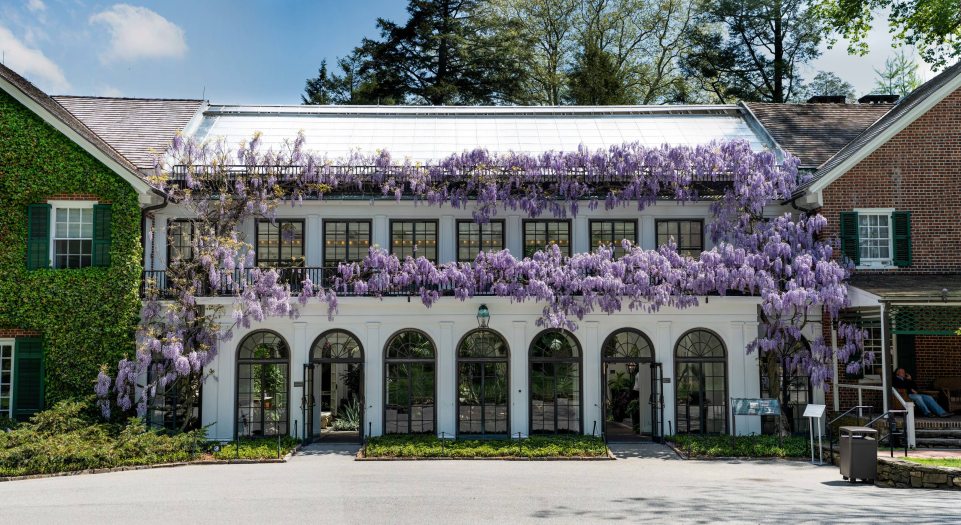
In 1906, Pierre S. du Pont purchased a 202-acre farm and former Quaker homestead in order to save a collection of historic trees, unaware at the time that his purchase would grow to become one of the greatest display gardens in the world. Developed with the specific purpose of display, the House & Theatre Gardens District is an excellent representation of how Pierre’s passion for horticulture, design, and preservation laid the groundwork for an unparalleled garden experience, to be enjoyed by guests for many years to come. Transport yourself in the early days of Longwood, taking in views that Pierre and his family enjoyed more than a century ago, including Peirce’s Park and Peirce’s Woods.

About This District

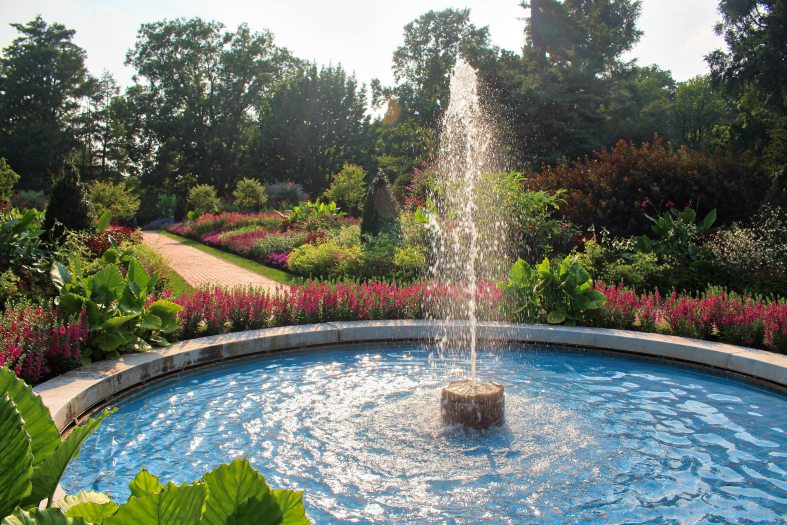
Pierre intended to restore his newly acquired land as a space for entertaining friends—but the lavish gardens and dazzling fountains would come later. His first projects involved tending to the trees for which he’d purchased the property and restoring Peirce’s Park, a historic arboretum planted a hundred years earlier by Quaker farmers Joshua and Samuel Peirce, to its former glory. In the process, his vision for Longwood’s future took shape in a series of “firsts.” The 600-foot flower garden (what is now Flower Garden Walk), punctuated with a simple round fountain (another first!), was so beautiful the following spring that Pierre decided to host his first Longwood garden party—a tradition that would continue until 1940.


I have recently experienced what I would formerly have diagnosed as an attack of insanity; that is, I have purchased a small farm.
- Pierre S. du Pont


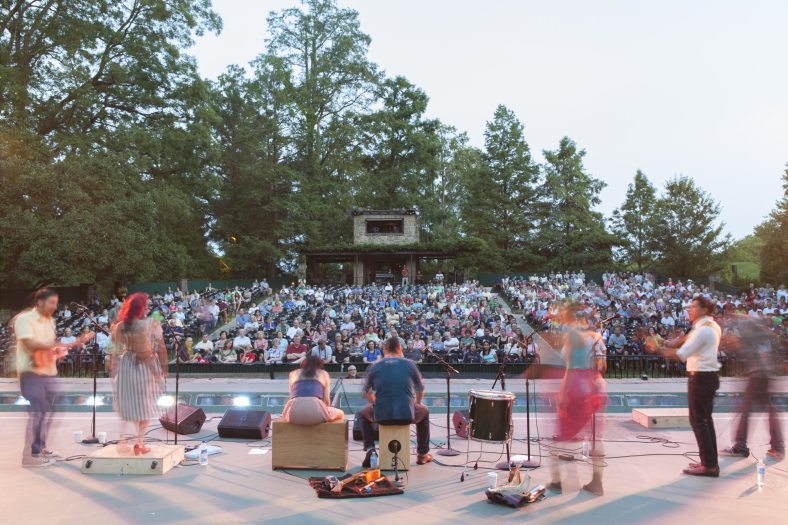
In 1913, following an inspiring trip to the Villa Gori in Siena, Italy, with his future wife, Alice, Pierre began construction on what would become the Open Air Theatre, complete with illuminated fountains that flanked the stage. When the fountains debuted at a 1914 garden party, the guests were delighted—as were Pierre and Alice. 

Pierre found the winters in the Brandywine Valley to be dreary, so in 1914 he began construction of his first conservatory as part of an L-shaped extension to the farmhouse. Planted with exotic tropical foliage and a marble fountain, it became Longwood’s first winter garden housed under glass. 
Gardens in this District

  • Flower Garden Walk & Compartment Gardens
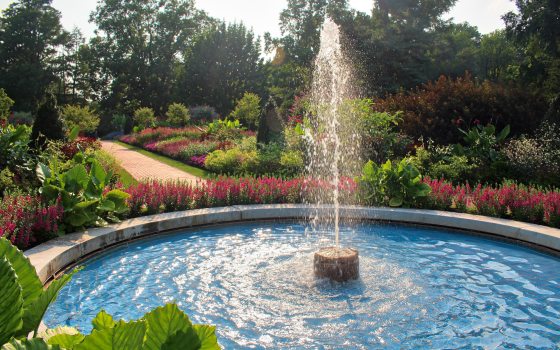
    Sun shines on a circular fountain with a brick pathway in the background leading through green garden beds

    Flower Garden Walk & Compartment Gardens

    In Pierre S. du Pont’s very first garden at Longwood, 600 feet of dazzling hues of orchestrated botanical forms will take your breath away in one of our most popular (and photographed!) gardens.

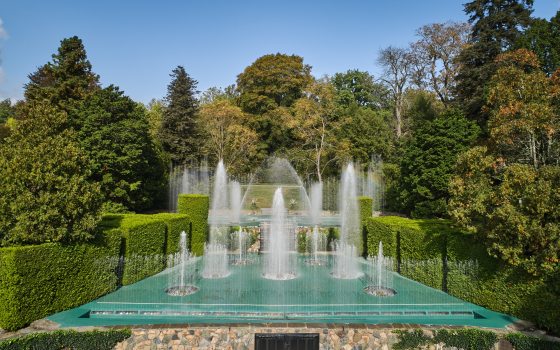
  • Open Air Theatre & Theatre Garden
    partially overhead view of fountain jets shooting up from a sea green stage, against a backdrop of tall green trees

    Open Air Theatre & Theatre Garden

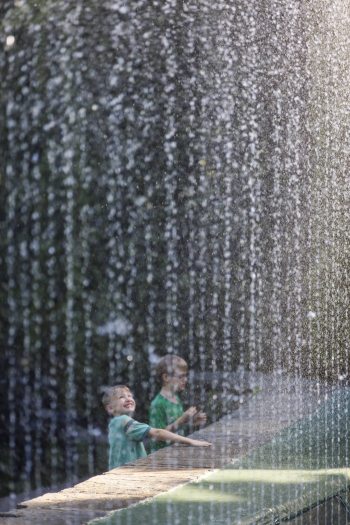
    Framed by a canopy of towering trees and clipped arborvitae, this Italian-style, outdoor garden theater has come alive with countless performances of every kind since its debut in 1914, and features fountain performances throughout the day.

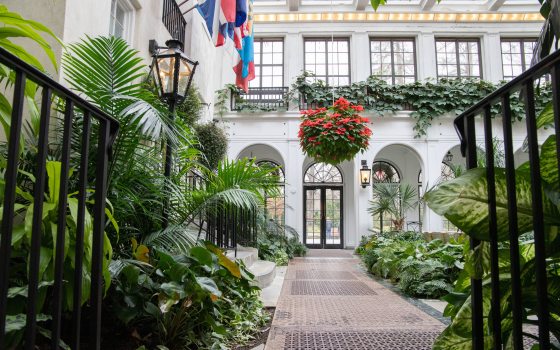
  • Peirce-du Pont House
    A hanging basket is seen in the distance in a small house conservatory with green plants, metal railings, and a lamppost

    Peirce-du Pont House

    Step back in time for a glimpse into the lives of the du Ponts and the Peirce family at one of the oldest buildings at Longwood. Not to be missed: a Monstera deliciosa vine that’s been there since the mid-1900s.

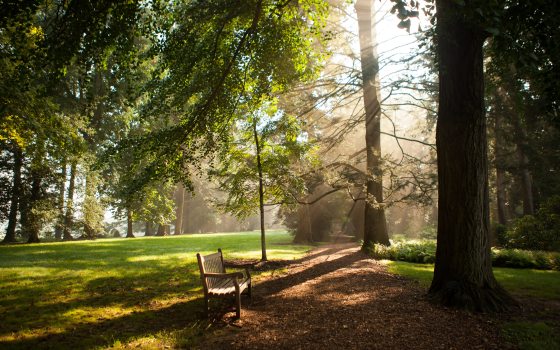
  • Peirce’s Park
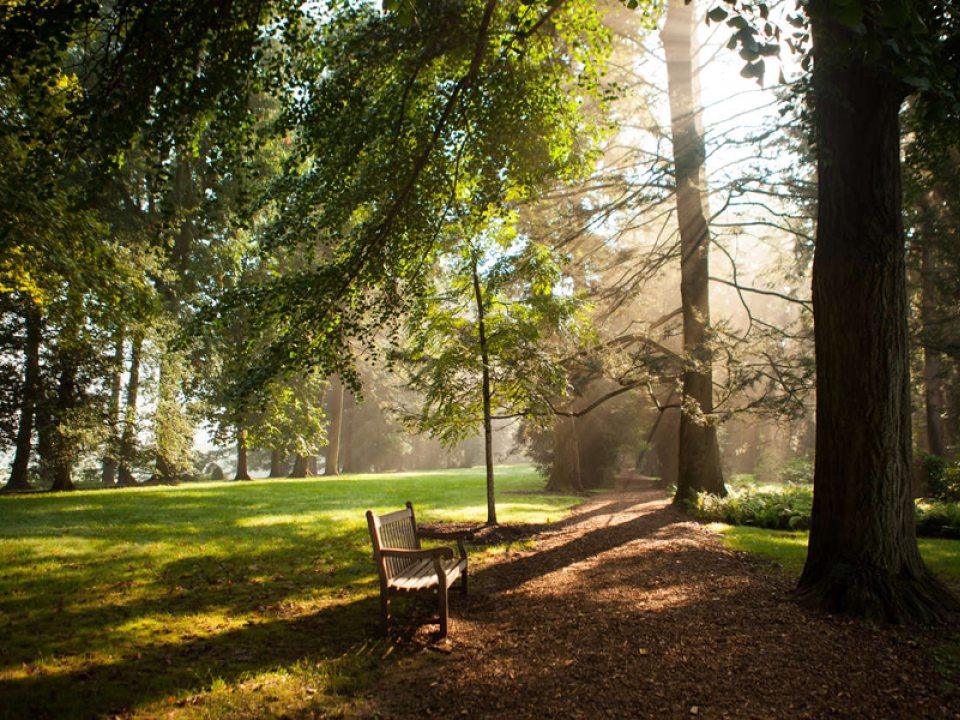
    sun shines through a line of trees on to a wooden bench sitting on path made of wood chips

    Peirce’s Park

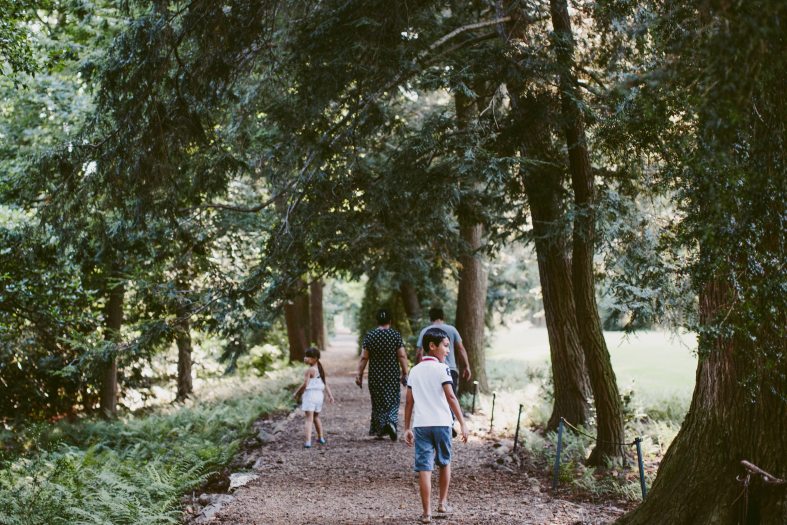
    Home to two notable allées of stately and spectacular trees, this area is where Longwood’s story begins. Enjoy woodland wildflowers and soaring tree specimens, many of which are more than 100 years old.

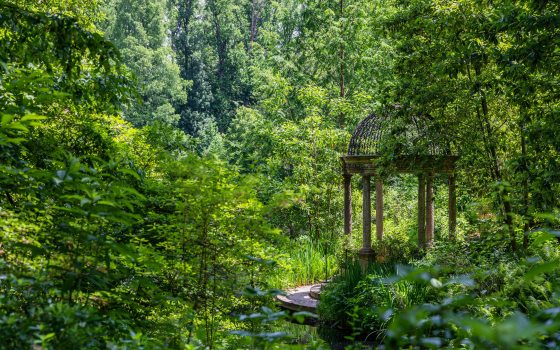
  • Peirce’s Woods
    A stone gazebo sits beside a small lake tucked into a forest of bright green trees

    Peirce’s Woods

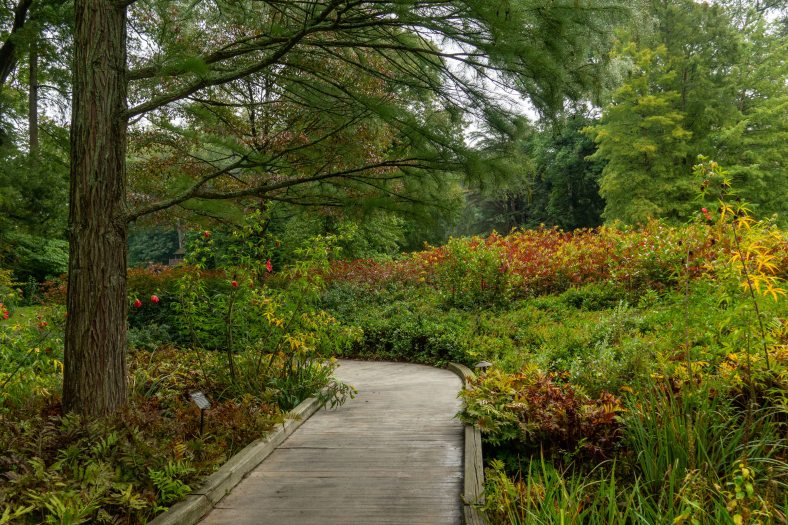
    This award-winning woodland garden, designed by W.Gary Smith, showcases mighty oaks, ashes, maples, and tulip-trees that tower over 200 species of native plants and cultivars, offering seasonal interest from spring through fall.

What’s in Bloom

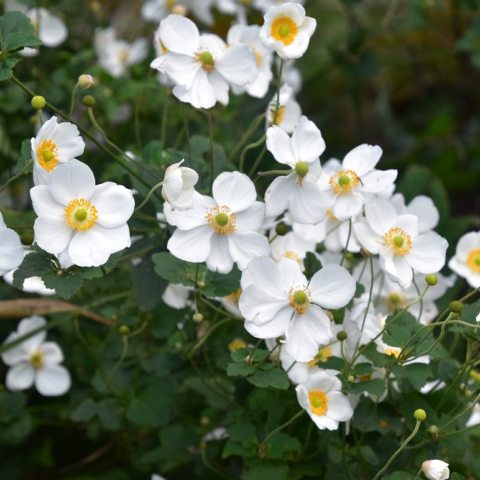
  • Oblong-shaped light purple petals with a yellow center.

    Chinese Anemone

    Anemone tomentosa ′Robustissima′
  • Pink Flower clusters

    Joe-Pye-weed

    Eutrochium sp.

    Commonly known as spotted Joe-Pye weed, Eutrochium is a hardy native perennial valued for its tall, elegant presence in the garden. Native to eastern North America, it can reach heights of 4 to 7 feet. From mid to late summer, it produces large, dome-shaped clusters of mauve-pink flowers that attract a wide variety of pollinators, including butterflies, bees, and hummingbirds. Beyond its striking appearance, this species plays a vital ecological role by supporting biodiversity and contributing to healthy habitats. It thrives in well-drained soils with full to partial sun, and its sturdy, spotted stems, attractive foliage, and late-season blooms offer lasting visual interest. Be sure to explore other species and cultivars of Joe-Pye weed blooming throughout the gardens!

  • Star-shaped, purple flower with prominent yellow center that grow in small flower clusters.

    Brazilian potato-tree

    Solanum wrightii
  • Peach-colore, multi-petaled flower against a bright blue sky

    Informal Decorative Dahlia

    Dahlia ′Steve Meggos'

    Dahlias, which offer late season blooms, come in many colors, shapes, and sizes, and because of their variety, can be incorporated into many garden landscapes. They also make excellent cut flowers. Native from Mexico to Colombia, dahlias grow naturally in frost-free climates. They grow from tubers, which should be planted in the spring when there is little chance of frost and dug up and stored before winter. 

  • Downy-thorn-apple

    Datura metel ′Belle Blanche′

    This striking ornamental plant flaunts large, trumpet-shaped, pure white flowers that unfurl in the evening and release a sweet, intoxicating fragrance. Native to tropical Asia but beloved worldwide, 'Belle Blanche' thrives in warm climates and can grow as a showy shrub or small tree. But beware, every part of this plant is toxic, so admire it with your eyes, Its stunning blooms and bold presence make it a favorite for moon gardens and nighttime pollinators.

  • Large, pink and white swirl flower with bright red center.

    Rose Mallow

    Hibiscus ′Starry Starry Night′

    ‘Starry Starry Night’ is a hardy, rose mallow hybrid with large flowers up to 8 inches across that blooms from July to September.  These flowers, which attract hummingbirds, are a stand out against the plant’s dark purple foliage.  This rose mallow grows to 3 feet tall and 4 feet wide and performs best in moist soils and full sun. You may associate hibiscus with tropical plants, but within the parentage of ‘Starry Starry Night’ are species of hibiscus native the eastern United States.

  • Red flowers with a pollinator

    Bolivian Sage

    Salvia oxyphora
  • Hardy Begonia

    Begonia grandis
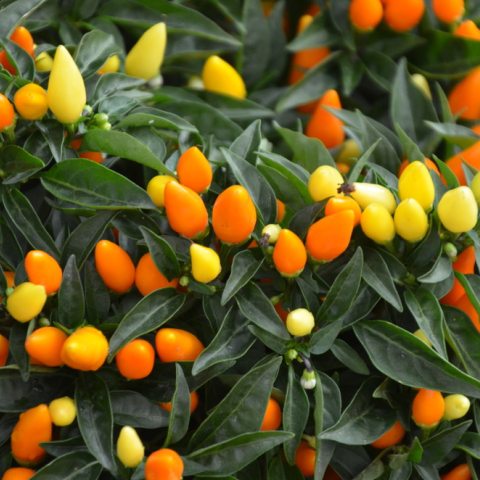
  • Ornamental Pepper

    Capsicum annuum ′Sedona Sun′

    With a variety of fruit shapes and sizes, ornamental peppers provide interest and vibrant colors to the autumn garden. These low maintenance annuals are good in containers or as bedding plants.

  • Round clusters of bright purple flowers in front of a tall fountain of water

    Globe-amaranth

    Gomphrena globosa 'Ping Pong Purple'