A cornerstone of the Longwood Fellows Program—our unique leadership accelerator for public garden professionals—is the partner garden placement. During this immersive experience, each Fellow spends two months at a host garden in the United States or abroad. The 2025–2026 cohort engaged in a wide range of meaningful experiences, from exploring relationships between public gardens and First Nations and Indigenous communities to honing their skills in storytelling. While at their host institutions, Fellows not only learned deeply about each organization’s mission and operations, but also contributed in impactful ways while applying the leadership insights and skills developed at Longwood. Here, upon their return, our Fellows share the discoveries, insights, and lasting memories shaped by their time in the field.
Jennifer Dick
Holden Forests and Gardens (Kirtland and Cleveland, OH)
I arrived in Cleveland, OH in late January during a long cold snap that froze my windshield washer fluid. Folks apologized for the frigid temperatures, and I assured them that it was still warmer than my home back in Canada. I was excited to spend the next eight weeks at Holden Forests and Gardens, even if it meant more snow.
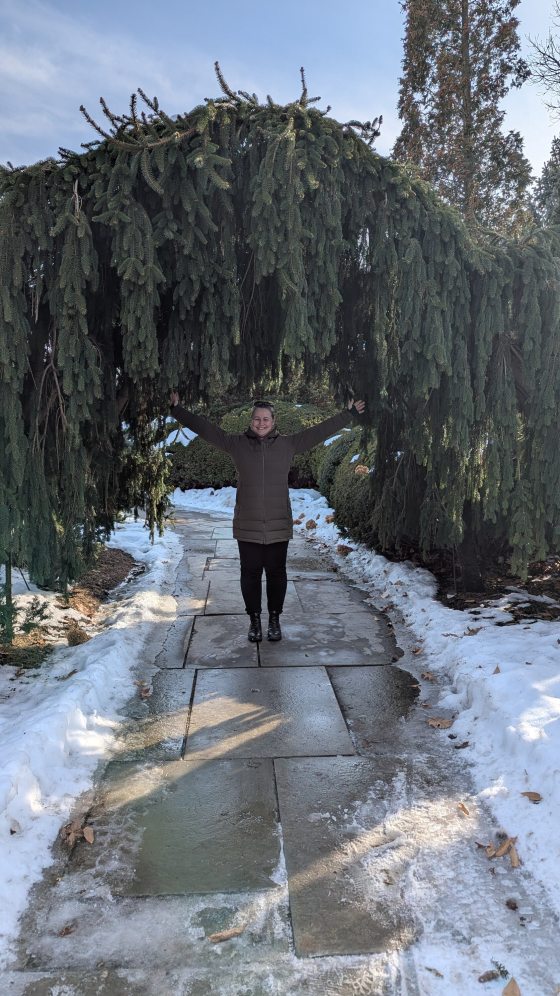
Longwood Fellow Jennifer Dick at the beautiful, snowy Cleveland Botanical Garden. Photo by Scott Sibley.
For my externship, I was looking for an opportunity to observe a leadership team working through high-level strategic initiatives. After a handful of conversations over the year with Holden Forests and Gardens President and CEO—and Longwood Fellow alumnus— Ed Moydell, I knew Holden Forests and Gardens was the perfect place given all the big, exciting things in motion. I’m grateful I was able to be involved in a few projects while there, and I was able to work at both campuses: the Cleveland Botanical Garden in Cleveland and the Holden Arboretum east of Cleveland in Kirtland.
One of my projects was to assist the team in preparing for and interviewing firms for a new interpretive master plan. I’ve long believed that interpretation can be a powerful strategic tool for organizations and so I appreciated the chance to share my expertise. Another project was to complete exploratory research for a possible intergenerational experience option for the Holden Arboretum. I visited several nature play areas in the region to get a sense of what is already available for local families and looked into what other notable gardens in the US offer.
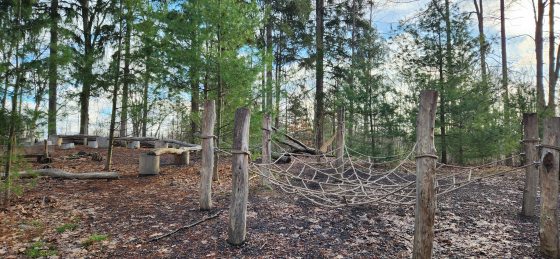
Buckeye Bud’s Adventure Woods at the Holden Arboretum. Photo by Jennifer Dick.
I was able to shadow a few areas related to the capital campaign to drive forward parts of Holden Forests and Gardens’ master plan, one of which was the process to contract an architecture firm and a landscape architect firm for work at each site. Given that this is a significant decision point for Holden Forests and Gardens and how it moves into the next phase of the master plan, it was impactful for me to observe the steps, the discussions, and how the team made decisions.
Holden Forests and Gardens was a fantastic fit for me at the right time. What I learned and observed in my short time will be invaluable as I move ahead in my own personal leadership journey. I am especially grateful to the leadership team who were so open and welcoming, and for the chance to witness some pivotal decisions as Holden Forests and Gardens moves forward with their mission and vision guided by the ambitious and sure-to-be-impactful master plan. What a great team doing great things!
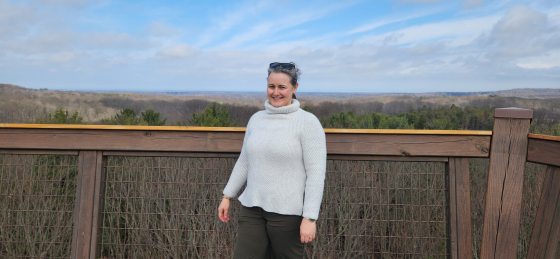
Longwood Fellow Jennifer Dick atop the 120-foot Emergent Tower at the Holden Arboretum. Photo provided by Jennifer Dick.
Carmen Grey
The Huntington Library, Art Museum, and Botanical Gardens (San Marino, CA)
My externship took place at The Huntington Library, Art Museum, and Botanical Gardens, where I arrived focusing my efforts on observing the relationships between First Nations and Indigenous Peoples and public gardens. I wanted to better understand what successful partnerships look like, and what makes them beneficial not just for the gardens, but for the First Nations as well.
With that in mind, throughout my externship I visited a range of institutions across Southern California to observe such relationships. As I observed and as I spoke with staff at The Huntington, my focus shifted. I became increasingly interested in focusing on what needs to exist internally to support such partnerships. My project evolved into clarifying the purpose, structure, and responsibility of a group that stewards Indigenous relationships within a public garden.
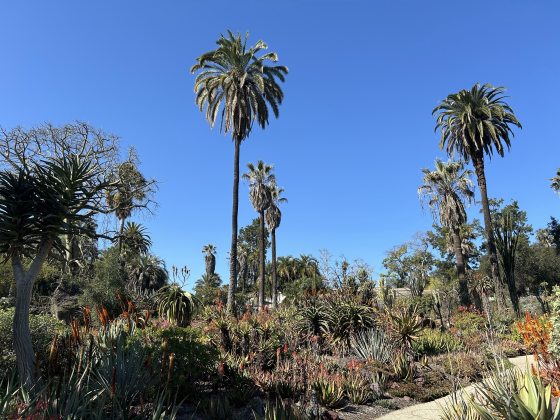
The Desert Garden at The Huntington. Photo by Carmen Grey.
At The Huntington, I worked with the Indigenous Relationship Stewardship (IRS) group to start exploring this clarification. The group is still relatively new, so much of the work involved identifying purpose, naming challenges, and thinking about next steps. One of the key outcomes of this work was a clearer understanding that the group does not need a rigid or overly formalized structure at this stage. Instead, there is a need for shared clarity around purpose, roles, and expectations so that staff feel supported and aligned as they engage in this work.
This project means a lot to me. One of my biggest “ah-ha” moments was realizing I want to be a bridge for this work, and that I want to help create the conditions for stronger, more respectful relationships between public gardens and First Nations communities. I became more aware of where this work is missing, and where it has the potential to grow. I also saw how complex it is, there is no single approach, and each relationship is deeply contextual.
Moving forward, I want to continue developing my understanding of the role First Nations stewardship has within the public garden landscape. I am especially interested in how governance, land stewardship, and interpretation shift when Indigenous leadership is centered.
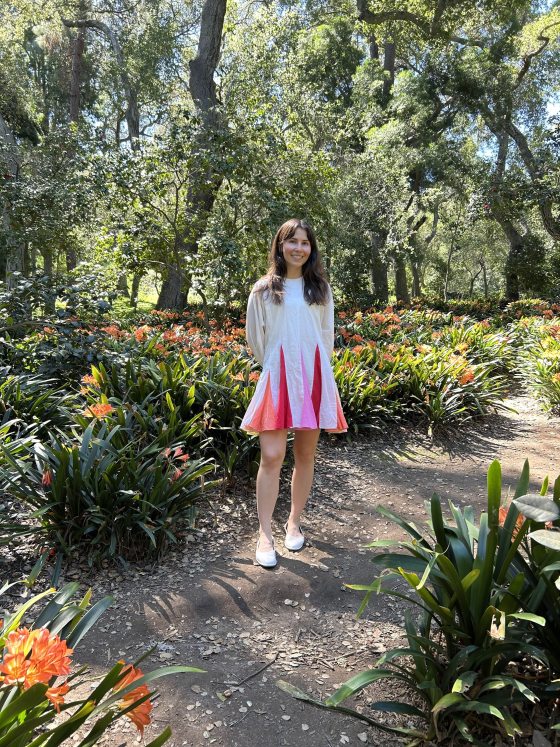
Longwood Fellow Carmen Grey. Photo provided by Carmen Grey.
As a next step, I plan to pursue cultural humility training to better understand current frameworks and approaches available to those who want to deepen their knowledge. This feels like an important foundation for doing this work responsibly. I will also apply what I’ve learned by continuing to advocate for thoughtful, relationship-based approaches in my future work.
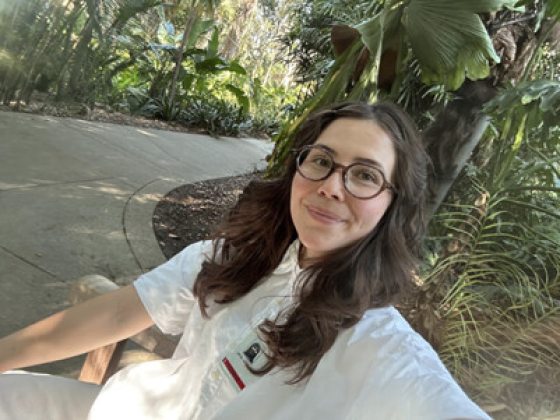
Longwood Fellow Carmen Grey. Photo provided by Carmen Grey.
The Huntington was an ideal place for this kind of work; between the botanical collections, library, and art, there is a lot to learn from. This experience has shaped how I approach partnerships. I’m more aware of the importance of building trust first, being thoughtful about engagement, and ensuring that the work is genuinely beneficial for the communities involved.
More broadly, I see this as ongoing work. I want to continue learning, building relationships, and contributing where I can. If anything, the externship showed me that this is just the beginning of a much longer process and one that I am committed to continuing.
Yan Li
The Huntington Library, Art Museum, and Botanical Gardens (San Marino, CA)
My externship journey began with a deliberate choice: The Huntington Library, Art Museum, and Botanical Gardens. As a plant enthusiast, there is something magical about the Southern California winter, which spanned the time I was there; while botanical gardens in the north are still blanketed in snow and dormant, The Huntington is already in full bloom. The air was thick with the scent of early blossoms, creating a sensory paradise that reaffirmed my passion for horticulture and cultural landscapes from the moment I stepped into the gardens. While its reputation for extraordinary plant diversity within a Mediterranean climate was a major draw, the place that truly captured my heart was Liu Fang Yuan, or the Garden of Flowing Fragrance, at The Huntington.
Liu Fang Yuan is more than just a collection of plants; it is a masterpiece of history and aesthetics. As one of the largest classical Chinese gardens outside of China, it serves as a bridge linking ancient Chinese heritage with a modern global audience. Its intricate architecture, serene lake, and carefully curated flora—from weeping willows to vibrant lotuses—embody the "scholar’s garden" tradition. Walking through its pavilions, I was struck by how the garden uses space and scenery to tell a story of harmony, providing the perfect cultural backdrop for my specialized project.
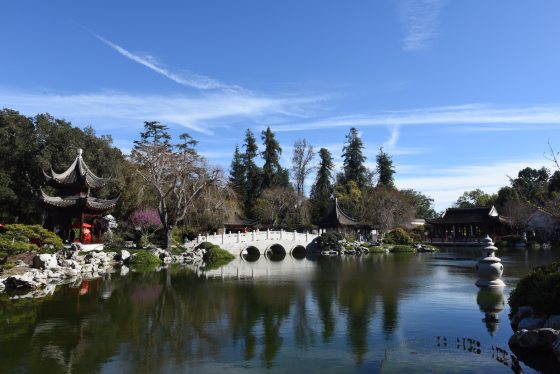
Chinese Garden (Liu Fang Yuan, the Garden of Flowing Fragrance) at The Huntington Library, Art Museum, and Botanical Gardens. Photo by Yan Li.
The core of my externship was a cross-departmental initiative between the Botanical Gardens and the Education and Public Engagement departments. I focused on developing a strategic interpretation plan and a specialized docent manual specifically for the Medicinal Garden (Cai Yao Pu) within Liu Fang Yuan. This project addressed a critical need: making the complex concepts of traditional Chinese medicine accessible to diverse visitors, especially children. Through extensive dialogue with volunteers, I identified "interpretive gaps". The final manual is more than a reference guide; it is a strategic toolkit designed to empower docents to distill deep cultural narratives into engaging, relatable experiences, effectively giving a "voice" to the healing power of nature.
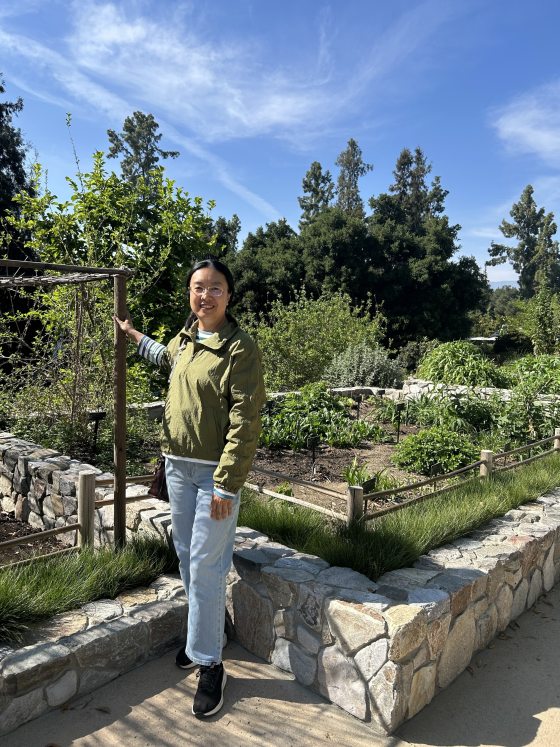
Longwood Fellow Yan Li in the Medicinal Garden (Cai Yao Pu) at The Huntington. Photo provided by Yan Li.
My work was deeply informed by shadowing school programs, where I observed the delicate art of student engagement. I analyzed how experienced docents used storytelling and inquiry-based questions to spark curiosity in young minds. A pivotal moment was my in-depth conversation with the Senior Manager of School District Partnerships. This dialogue opened my eyes to the structural complexities of educational outreach and the importance of aligning garden programs with school curricula. I realized my manual would serve as a practical bridge, translating these academic requirements into simple, interactive narratives that docents can use to lead an effective tour.
My perspective was further broadened by visiting several other California botanical icons, including Santa Barbara Botanic Garden, Ganna Walska Lotusland, South Coast Botanic Garden, San Diego Botanic Garden, and the California Botanic Garden. These visits revealed a shared, fierce dedication to native plant conservation that was truly inspiring. I was particularly struck by the San Diego Zoo’s philosophy, where the botanical landscape is seamlessly integrated with animal enclosures, creating an ideal habitat that forms a cohesive, organic whole. These experiences solidified my belief that a garden’s true value lies in its role as a living bridge; whether through protecting rare natives or crafting perfect botanical settings for animals, its mission is to reconnect us with the natural world.
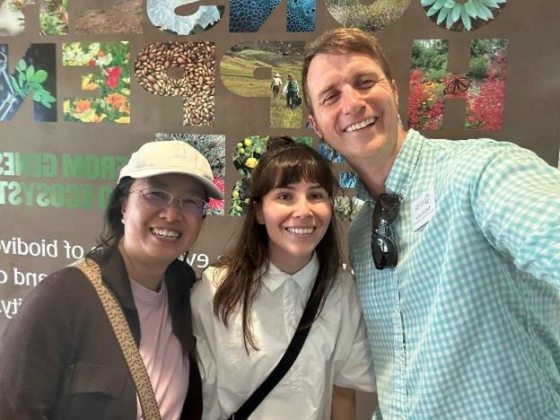
From left: Longwood Fellows Yan Li and Carmen Grey with Santa Barbara Botanical Garden Horticulture and Operations Director (and Longwood Graduate Program alum!) Keith Nevison. Photo by Keith Nevison.
It is with immense gratitude that I concluded my time at The Huntington, an institution that has profoundly shaped my perspective on cultural landscapes. I am especially thankful for the Longwood Fellows Program for opening this door and supporting my vision for public engagement. Bridging the gap between botanical science and public education has been a privilege, and the moments shared in Liu Fang Yuan and throughout California will stay with me always. I leave with a rare and extraordinary gift that will remain a cornerstone of my professional life.
Nathaniel Cody
Royal Botanic Garden Edinburgh (Edinburgh, United Kingdom)
On my first morning at the Royal Botanic Garden Edinburgh (RBGE), I became acutely aware of how much history can be held in a single place. Surrounded by centuries‑old collections, Victorian glasshouses, and people deeply committed to long‑term stewardship, I realized this externship would be less about moving quickly and more about listening, carefully learning how impact is built over time.
We often talk about the first 90 days as a defining chapter in a new role, and as a time for onboarding, learning, and integration. Upon my arrival at RBGE, however, I became focused on the importance of the first week. When time is short, intention matters. Those early days became an opportunity to decide how I wanted to show up as a listener, a learner, and a thoughtful contributor. Guided by curiosity, I spent my first five days asking questions, observing rhythms, and learning from colleagues who generously shared their time, insights, and stories. That openness shaped everything that followed.
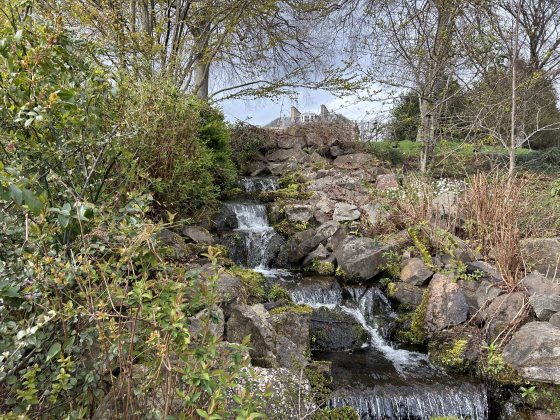
The Chinese Hillside at Royal Botanic Garden Edinburgh, with the historic Inverleigh House in the background. Photo by Nathaniel Cody.
Working with RBGE Director of Development and Communications Lauren Bradshaw and the Marketing and Communications and Development teams allowed me to deepen my skills in storytelling while learning from a garden with nearly 300 years of history and a global reputation for research, conservation, and education.
One of the most powerful experiences of my placement was going behind the scenes at RBGE’s world‑renowned herbarium, the third largest in the UK and one of the top 20 globally. Often described as libraries of the plant world, herbaria function more like living museums housing dried, pressed, and meticulously cataloged specimens that help scientists understand our planet’s past and shape its future.
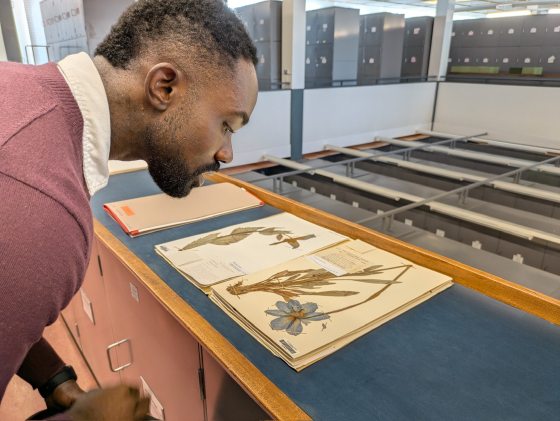
RBGE’s herbarium holds more than three million specimens, representing roughly two thirds of the world’s known flora. Researchers from around the world use this collection to track biodiversity loss, study plant diseases, rediscover species thought to be extinct, and uncover insights that can inform conservation and medicine. Photo provided by Nathaniel Cody.
Walking through its collections felt like stepping into a botanical time capsule. Some specimens date back to the 1600s, including one collected by Charles Darwin. What struck me most as a leader was not just the scale of the collection, but the responsibility behind it. This is a 300‑year‑long record of curiosity, care, and global collaboration one that continues to grow each year.
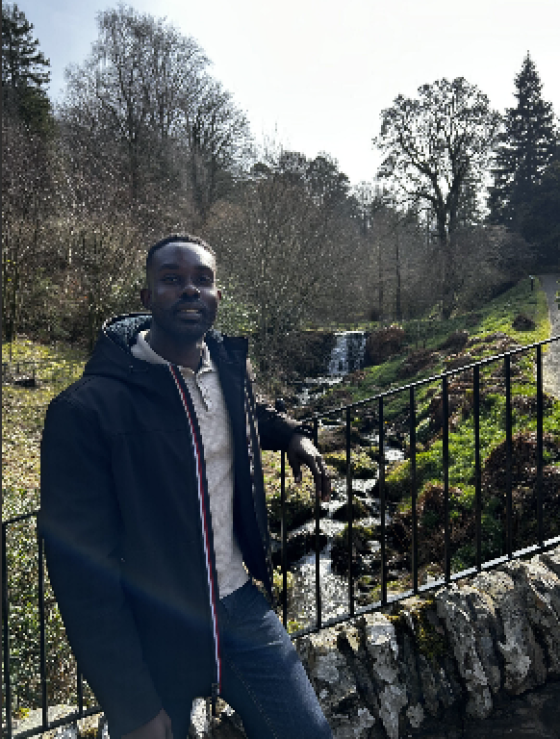
Longwood Fellow Nathaniel Cody at Dawyck Botanic Garden. Photo provided by Nathaniel Cody.
Through RBGE’s ongoing digitization efforts, over a million specimens have already been made publicly accessible, reinforcing how storytelling and access are central to stewardship; preserving knowledge only matters if it can be shared.
This theme of responsibility connected across RBGE’s four gardens. During my placement, I visited Dawyck Botanic Garden, one of RBGE’s satellite sites, alongside Director of Learning and Engagement Sarah Cathcart. Set within 65 acres of woodland, Dawyck is a world‑class arboretum where plants from Nepal, China, and Chile grow alongside some of Britain’s oldest trees. Walking its paths made tangible the link between historic exploration and today’s obligation to protect what is rare and vulnerable. Care for plants, place, and people is inseparable and gardens quietly shape how we imagine a sustainable future.
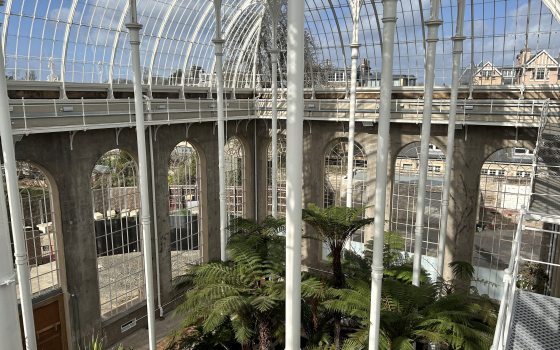
That same balance between honoring the past and planning for what comes next was evident in the restoration of RBGE’s historic Palm Houses. Standing within these Victorian glass structures, I was reminded that preservation is not about freezing something in time. It is about evolving with care.
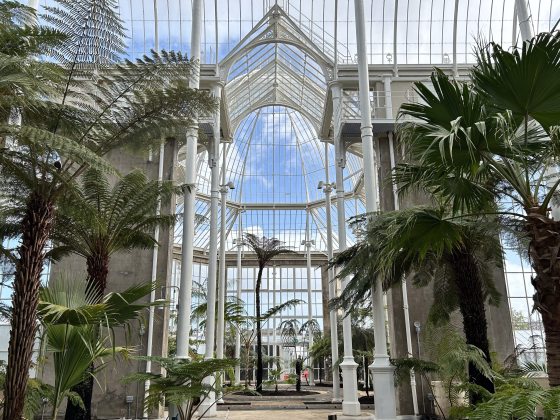
Restoring RBGE’s historic Palm Houses requires strategic investment, thoughtful decision making, and a belief in long term impact. Seeing them replanted and returned to purpose underscored how leadership often involves invisible work planning not for immediate results, but for future generations. Photo by Nathaniel Cody.
As my placement came to an end, I found myself reflecting on the complexity of leaving a place that had so quickly felt like home. Living in a new country, working alongside teams that welcomed me fully, and reaffirming that gardens are where I belong made this experience especially meaningful.
Collaborating with RBGE’s Development team on a tool designed to highlight the garden’s impact and invite support for its future was a particularly rewarding culmination of my work. Engaging with stories of land stewardship, community care, and global responsibility reinforced why storytelling is such a powerful leadership tool. Knowing I contributed something that will continue to support RBGE’s mission long after my departure made the goodbye easier and the experience lasting.
This experience deepened my understanding that leadership in public gardens is rooted in curiosity, care, and long‑term thinking. At RBGE, I learned that the stories we tell and how we choose to share them play a vital role in shaping the future of our gardens and the communities they serve.
Editor’s note: Interested in joining the Fellows Program to advance your career in public gardens? Know a public garden professional looking to accelerate their skills? Applications for the 2027–2028 Fellows cohort are now open.