We recently welcomed four remarkable individuals to our Gardens, and we can’t wait to introduce them to you. Coming from California, Ghana, Illinois, and Mexico, they bring expertise spanning strategic storytelling, environmental stewardship, botany, and beyond. Together, they form the 2026-27 Longwood Fellows cohort, joining our internationally recognized leadership accelerator program dedicated to advancing the skills, knowledge, and impact of public garden professionals. With backgrounds as diverse as their interests, our newest Fellows cohort is united by a shared commitment to public horticulture and its power to connect people, plants, and communities. As they begin this transformative year of learning, leadership, and discovery, we invite you to get to know the individuals who are helping shape the future of our field.
Julia Kligman
Longwood Fellow Julia Kligman (San Francisco, CA) brings a decade of communications and public relations experience to the Longwood Fellows Program. Her path to public horticulture was not driven by a single defining moment, but developed gradually through a love of plants, a passion for equitable access to green space, and years of coursework, volunteering, and self-directed learning. “There wasn’t one lightning bolt moment that sparked my interest,” shares Kligman. “It built gradually. What continues to inspire me is the reality that there is so much to learn, see, and experience in this field.”
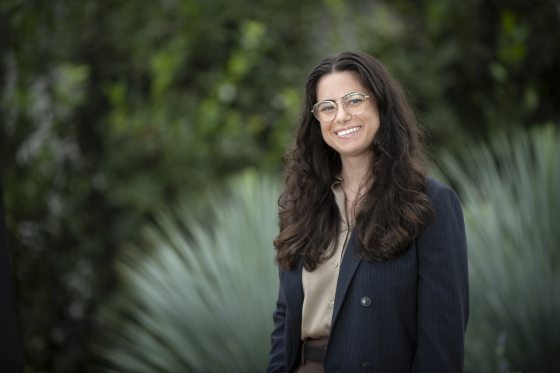
Longwood Fellow Julia Kligman. Photo by Carlos Alejandro.
Kligman’s career has centered on helping organizations build strong narratives. After starting in educational entertainment, she went on to represent technology companies and venture capital firms through public relations agency and in-house roles. Her work has spanned executive communications, media relations, partnerships, internal communications, and content strategy. “The throughline has been all about building reputational credibility through strategic storytelling and turning complex ideas into stories people want to hear,” she shares. She now brings that expertise to public horticulture leadership exploration through the Longwood Fellows Program.
A graduate of American University in Washington DC with a degree in strategic communications, Kligman also credits the Environmental Horticulture Program at San Francisco City College as a key driver in her journey. There, she took evening courses in greenhouse production, plant identification, and horticulture business practices. “What started as curiosity turned into something closer to a second education,” shares Kligman. “It’s why I started looking for a way to bring horticulture into my career instead of viewing it as a separate hobby.” A dedicated volunteer, Kligman has contributed her time to horticultural organizations throughout San Francisco.
Drawn to Longwood's Fellows Program because of its blend of learning and hands-on experience, Kligman saw it as "the most efficacious and honest way to understand where my skills and background could fit into the public horticulture industry." She shares, “So much of my work throughout my career has been about lifelong learning; about new sectors, niches, audiences, and business landscapes to effectively reach the audiences that matter.” Motivated by the pursuit of knowledge and broadening her understanding, Kligman looks forward to extending this approach to public horticulture leadership.
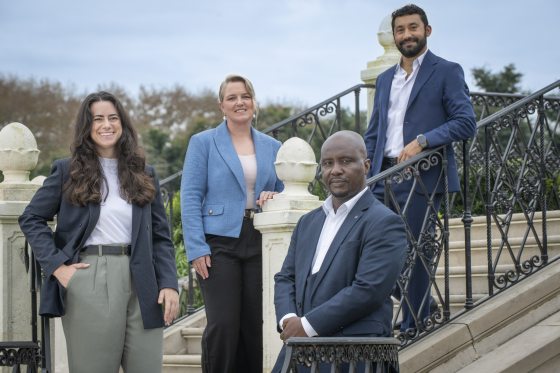
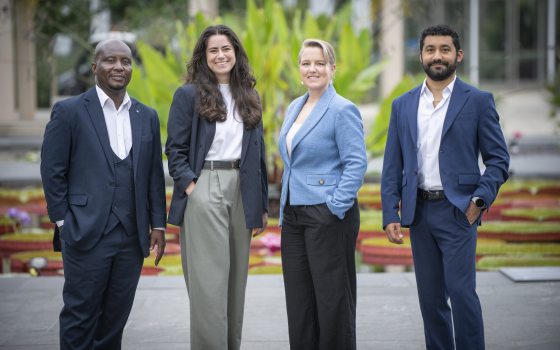
From left: Longwood Fellows Julia Kligman; Katrina Quint; William Kofi Ofei; and Cristóbal Sánchez, Ph.D. in Longwood’s Main Fountain Garden. Photo by Carlos Alejandro.
To Kligman, public gardens are far more than beautiful destinations. They are “essential civic infrastructure. They serve their communities in a way that nothing else can, beyond the obvious of offering space for gathering, reflection, and beauty. Public horticulture organizations educate and inspire people of all ages and backgrounds, contribute to essential conservation efforts and scientific research, and tell the story of the relationship between people and plants, while remaining committed to preserving these spaces and programs for future generations.”
As she continues her fellowship journey, she is excited to bring her passion for lifelong learning, communications expertise, and commitment to community into a field she believes serves a meaningful societal role.
William Kofi Ofei
“As a child living in a concrete jungle like Accra, Ghana, seeing lawns was rare,” recalls Longwood Fellow William Kofi Ofei, who joins the Fellows Program with 20 years of service at the University of Ghana, Legon where he serves as curator of the university’s Grounds and Gardens Unit. “Whenever I saw a lawn that was neatly manicured or a hedge trimmed with dexterity, I became excited,” he shares. His parents would also take him to the Aburi Botanical Gardens, where “the lushness of the lawns, the weather, trees, palms, and the floral designs were all a beauty to behold. I didn’t want to leave the place whenever we visited. This started building my love for nature, which I later came to know as public horticulture.”
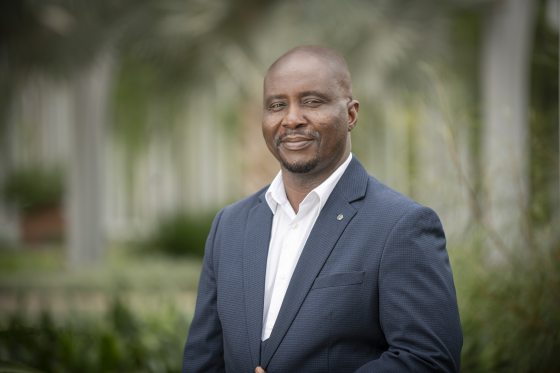
Fellow William Kofi Ofei. Photo by Carlos Alejandro.
Those early experiences led to a distinctive career that blends horticultural expertise with strategic leadership. Holding a Bachelor of Science in Agriculture from Kwame Nkrumah University of Science and Technology and an MBA from the Ghana Institute of Management and Public Administration, Ofei started his career as a Senior Assistant Curator at the University of Ghana, before becoming Principal Assistant Curator, and then Chief Curator, in which he supervises a staff of 120 people. There, he provides strategic oversight for the construction, development, and stewardship of the university’s landscapes, ensuring they reflect both ecological sustainability and aesthetic excellence as part of one of Ghana’s most prominent academic environments. Ofei’s work has included reimagining major campus spaces, leading the planting of more than 10,000 trees on campus, and serving as a key contributor to national tree-planting initiatives. Also a Council Member of the Ghana Institute of Horticulturists, Ofei represents the Southeastern Zone, of which he is the Chairman.
Along the way, Ofei has developed expertise in ornamental horticulture, plant conservation, biodiversity stewardship, and environmental stewardship. He has also cultivated a passion for mentoring others, helping guide the next generation of horticultural professionals. “I focus on building relationships across disciplines and exploring how public gardens can create meaningful environmental and societal impact, while combining a global perspective with a deep commitment to learning and collaboration.”
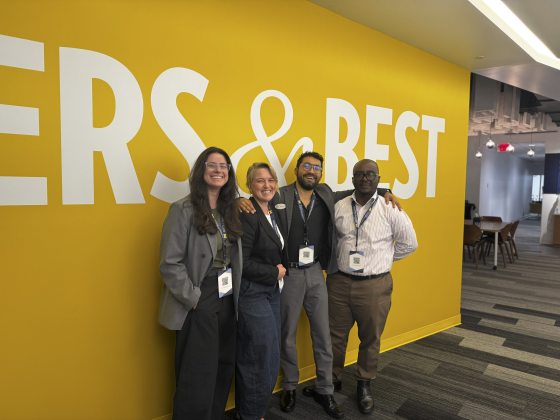
From left: Longwood Fellows Julia Kligman; Katrina Quint; Cristóbal Sánchez, Ph.D.; and William Kofi Ofei at the University of Michigan’s Ross School of Business. Photo provided by Katrina Quint.
Ofei was drawn to the Longwood Fellows Program because of its unique combination of horticulture and leadership development: as an opportunity that "will sharpen my leadership acumen and propel me for greater impact." He is particularly excited to engage with the diverse perspectives of his fellow cohort members and learn from the experience of Longwood staff and industry thought leaders.
Katrina Quint
Katrina Quint joins the Longwood Fellows Program from Chicago, where she served as the Director of Horticulture at the Lincoln Park Zoo. With more than 15 years of experience in public horticulture, she brings a passion for plants, people, and the role gardens play in strengthening communities. Quint holds a Bachelor of Science in biology from Iowa State University, is a certified arborist, and traces her earliest horticultural influences to her childhood in Iowa, where she worked alongside her mother in the family business, Ingrid's Landscaping.
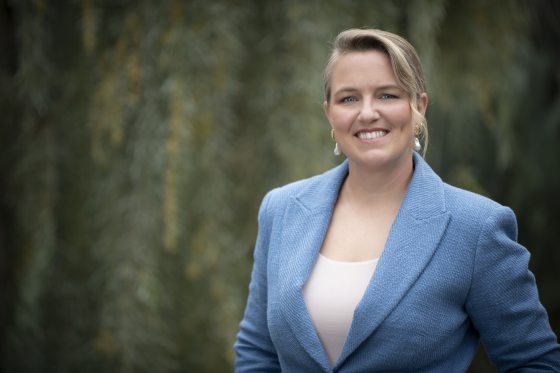
Fellow Katrina Quint. Photo by Carlos Alejandro.
Quint’s path into public horticulture was not immediate “It took some trial and error for me to find my way to public horticulture,” she shares. “Soon after graduating college and taking several jobs in an indoor setting, I realized I preferred to spend at least part of the day outside.” That realization led her to a seasonal position at The Morton Arboretum, which led to a full-time horticulturist role in their Children’s Garden, a position that offered a broad range of experiences. She worked with teen volunteers, cultivated vegetable and fruit gardens, maintained a pond, and designed and implemented annual displays, all while developing a passion for woody plants. “There were many years where I couldn’t imagine working anywhere else,” she shares.
After nine years at The Morton Arboretum, her willingness to embrace new challenges led her to the Lincoln Park Zoo, where she and her team worked to steward and elevate the 49-acre zoo gardens to not only an accredited arboretum and botanic garden, but a beautiful landscape focused on supporting the animals in their care and the local urban wildlife. “The growth of the gardens was only possible through cultivating an engaged team, which is what I considered to be the most rewarding aspect of my work at the zoo,” she reflects.
Throughout her career, mentorship has played an important role in her development, shaping Quint's growing interest not only in plants and garden design, but also in leadership, mentorship, and professional development. "My original passion for plants, how they fit into the landscape, and garden design has shifted to not only include those aspects, but also that of cultivating a team within that space." Today, she is especially passionate about helping early-career horticulturists grow while connecting people to nature through thoughtful, ecologically grounded landscapes.
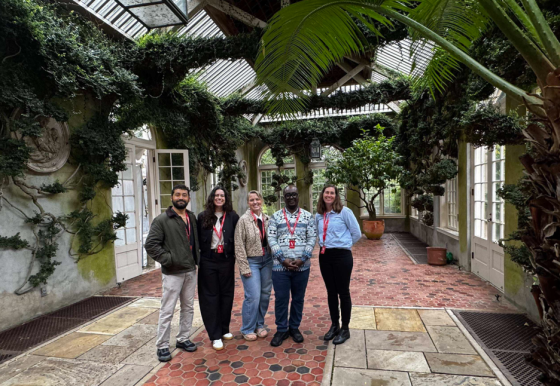
From left: Longwood Fellows Cristóbal Sánchez, Ph.D.; Julia Kligman; Katrina Quint; and William Ofei Kofi, along with Longwood Fellows Program Director Anastasia Sallen at Dumbarton Oaks in Washington DC. Photo provided by Katrina Quint.
Quint was drawn to the Longwood Fellows Program by the opportunity to grow both personally and professionally while gaining a broader global perspective on public horticulture. She is particularly interested in sustainability, climate change, and naturalistic planting design, and she sees tremendous opportunity for horticulture staff to play larger roles in conservation and research initiatives. “Public gardens have the unique opportunity to not only connect people with nature, but to be drivers for change,” she shares. “By creating space for diverse perspectives and strong connection with the community, public gardens are positioning themselves to address global climate change from the ground up, as well as work towards providing space and purpose for humans to connect during the current digital age.”
Cristóbal Sánchez, Ph.D.
From an early age, a love of plants and nature was woven into Fellow Cristóbal Sánchez’s life. Influenced by his mother’s work as a plant pathologist and his father’s work as an agroecologist and researcher, he developed a deep appreciation for the natural world. That foundation grew into a fascination with Mexico’s extraordinary plant diversity and ultimately led him to pursue a degree in biology at the National Autonomous University of Mexico, followed by graduate studies in botany and forest sciences from the College of Postgraduates in Mexico. Along the way, he “realized that botanical gardens are unique spaces where science, conservation, education, and society come together.”
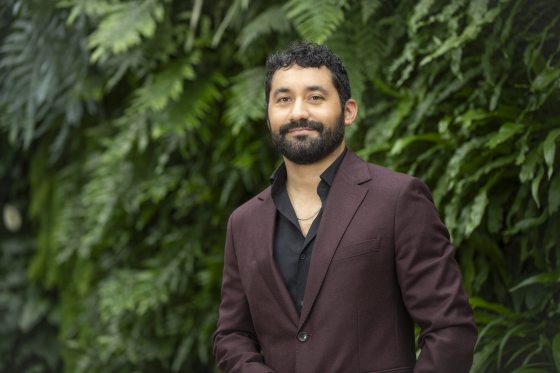
Fellow Cristóbal Sánchez, Ph.D. Photo by Carlos Alejandro.
Sánchez joins the Longwood Fellows Program from the Vallarta Botanical Garden in Puerto Vallarta, Mexico, where he serves as Chief Science Officer. His work has focused on botanical exploration, ecology, and conservation of threatened native tree species, and ethnobotanical studies of the Hñähñu, Yuhmu, and Nahua cultures. He currently serves on the Board of Directors of the Botanical Society of Mexico and as Vice President of the Latin American Botanical Association. His recent work has focused on botanical exploration, ecology, and conservation of threatened native plant species in the Los Horcones River basin and the Sierra El Cuale in western Jalisco.
Sánchez is particularly interested in the challenges associated with biodiversity loss, climate change, and the “growing need for botanical gardens to expand their social relevance. I believe public horticulture institutions have a unique opportunity to lead conservation efforts while also fostering community engagement and environmental education,” he shares. “As trusted institutions, botanical gardens can help bridge the gap between scientific knowledge and public action.” He is especially interested in influencing public policy related to biodiversity conservation, while allowing powerful opportunities to connect people with plants and their stories.
Inspired by the enthusiasm of previous Longwood Fellows and eager to learn from colleagues around the world, Sánchez sees the Longwood Fellows Program as an opportunity to grow as both a leader and conservation advocate. He hopes to gain new insights into leadership, governance, and institutional innovation while sharing perspectives shaped by Mexico’s remarkable biological and cultural diversity, and how they have profoundly shaped his personal and professional journey.
Editor’s note: Throughout their time in the Fellows Program, our Fellows will share stories, lessons learned, and reflections on their experiences. We invite you to follow along.