House & Theater District

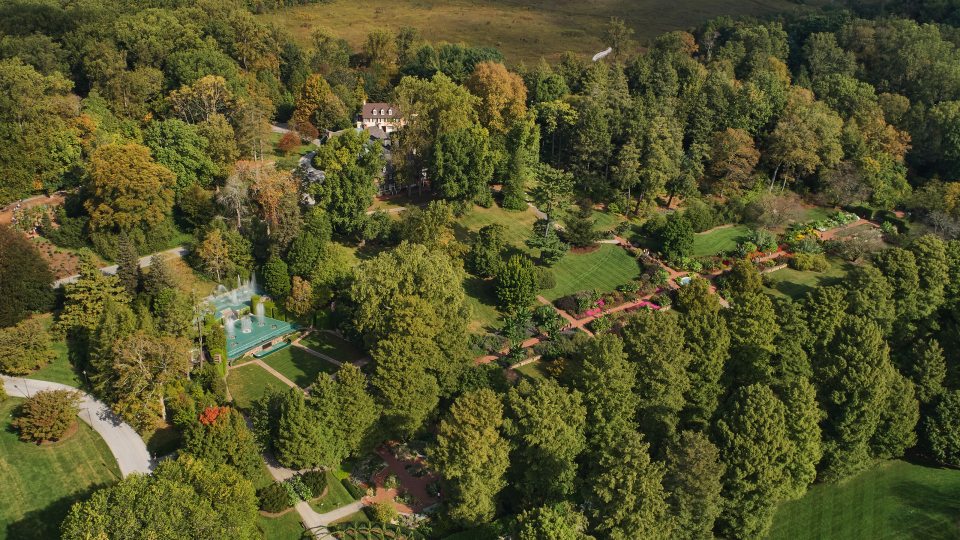
Aerial view of house and theater gardens filled with trees, a small fountain garden, and brick house

The story of Longwood Gardens begins here.

In 1906, Pierre S. du Pont purchased a 202-acre farm and former Quaker homestead in order to save a collection of historic trees, unaware at the time that his purchase would grow to become one of the greatest display gardens in the world. Developed with the specific purpose of display, the House & Theatre Gardens District is an excellent representation of how Pierre’s passion for horticulture, design, and preservation laid the groundwork for an unparalleled garden experience, to be enjoyed by guests for many years to come. Transport yourself in the early days of Longwood, taking in views that Pierre and his family enjoyed more than a century ago, including Peirce’s Park and Peirce’s Woods.

About This District

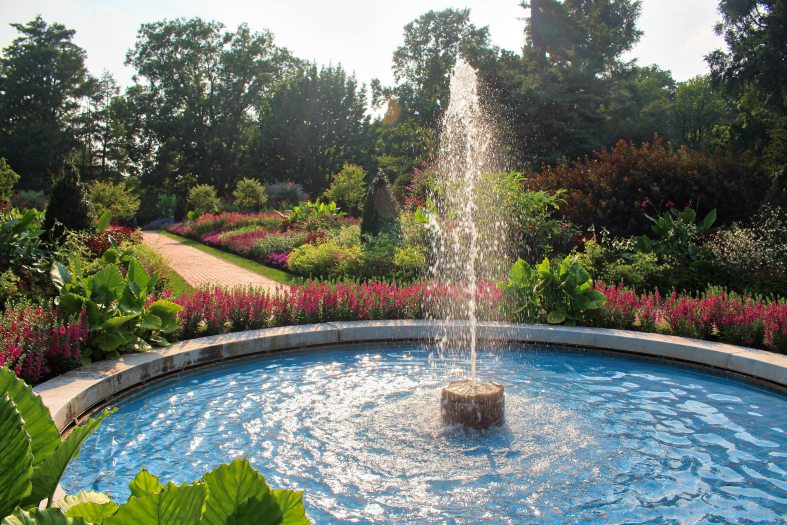
Pierre intended to restore his newly acquired land as a space for entertaining friends—but the lavish gardens and dazzling fountains would come later. His first projects involved tending to the trees for which he’d purchased the property and restoring Peirce’s Park, a historic arboretum planted a hundred years earlier by Quaker farmers Joshua and Samuel Peirce, to its former glory. In the process, his vision for Longwood’s future took shape in a series of “firsts.” The 600-foot flower garden (what is now Flower Garden Walk), punctuated with a simple round fountain (another first!), was so beautiful the following spring that Pierre decided to host his first Longwood garden party—a tradition that would continue until 1940.


I have recently experienced what I would formerly have diagnosed as an attack of insanity; that is, I have purchased a small farm.
- Pierre S. du Pont


In 1913, following an inspiring trip to the Villa Gori in Siena, Italy, with his future wife, Alice, Pierre began construction on what would become the Open Air Theatre, complete with illuminated fountains that flanked the stage. When the fountains debuted at a 1914 garden party, the guests were delighted—as were Pierre and Alice. 

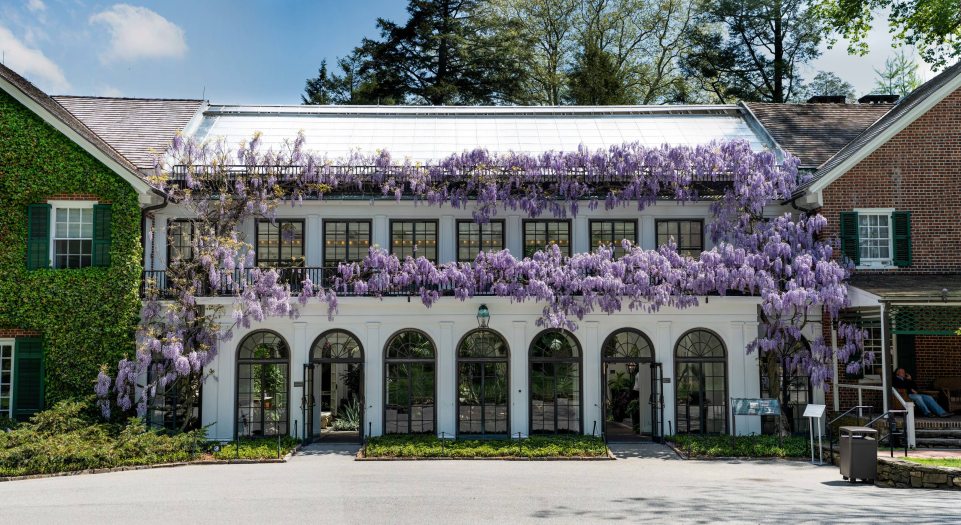
Pierre found the winters in the Brandywine Valley to be dreary, so in 1914 he began construction of his first conservatory as part of an L-shaped extension to the farmhouse. Planted with exotic tropical foliage and a marble fountain, it became Longwood’s first winter garden housed under glass. 
Gardens in this District

  • Flower Garden Walk & Compartment Gardens
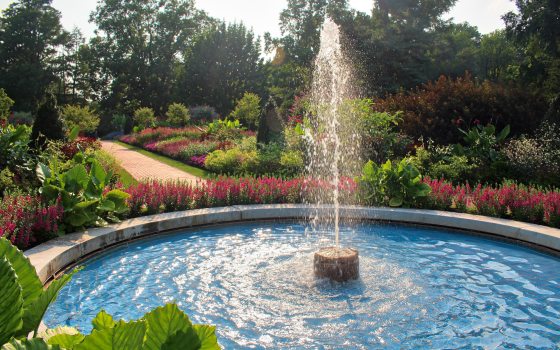
    Sun shines on a circular fountain with a brick pathway in the background leading through green garden beds

    Flower Garden Walk & Compartment Gardens

    In Pierre S. du Pont’s very first garden at Longwood, 600 feet of dazzling hues of orchestrated botanical forms will take your breath away in one of our most popular (and photographed!) gardens.

  • Open Air Theatre & Theatre Garden
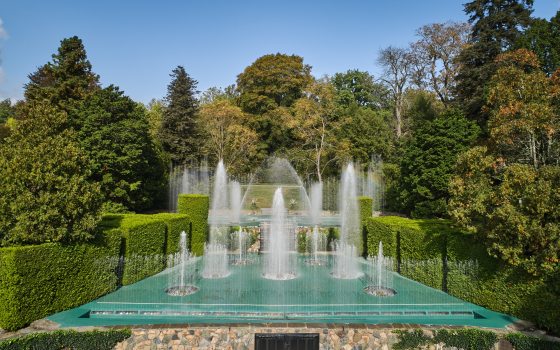
    partially overhead view of fountain jets shooting up from a sea green stage, against a backdrop of tall green trees

    Open Air Theatre & Theatre Garden

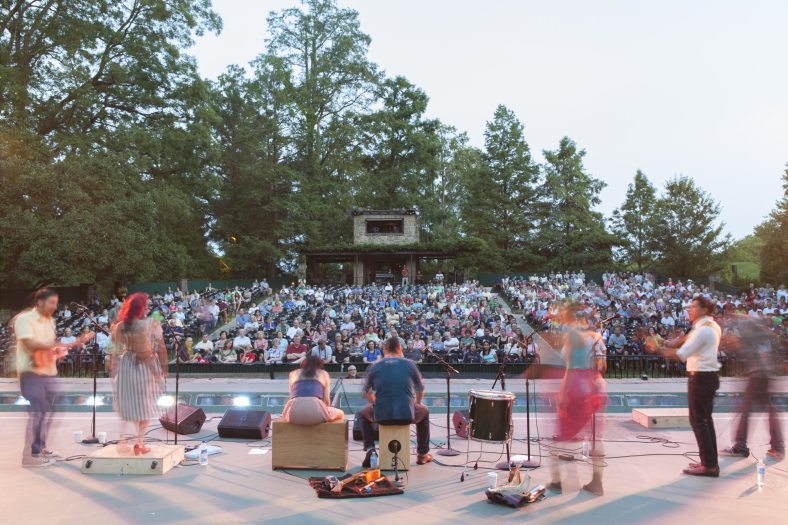
    Framed by a canopy of towering trees and clipped arborvitae, this Italian-style, outdoor garden theater has come alive with countless performances of every kind since its debut in 1914, and features fountain performances throughout the day.

  • Peirce-du Pont House
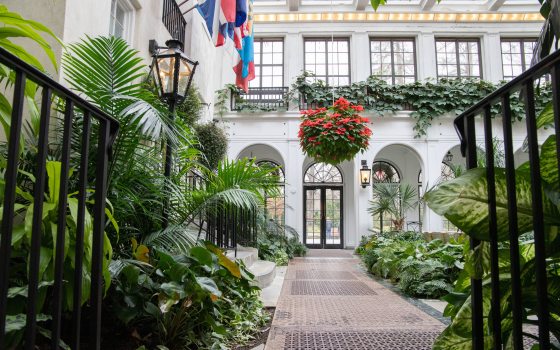
    A hanging basket is seen in the distance in a small house conservatory with green plants, metal railings, and a lamppost

    Peirce-du Pont House

    Step back in time for a glimpse into the lives of the du Ponts and the Peirce family at one of the oldest buildings at Longwood. Not to be missed: a Monstera deliciosa vine that’s been there since the mid-1900s.

  • Peirce’s Park
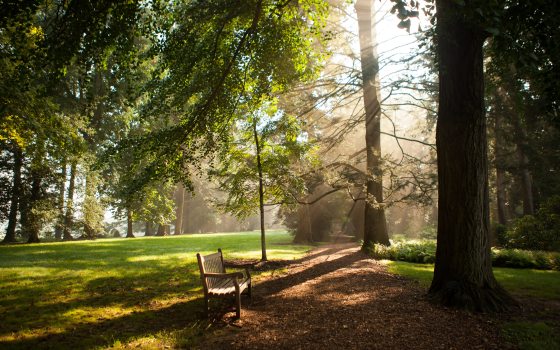
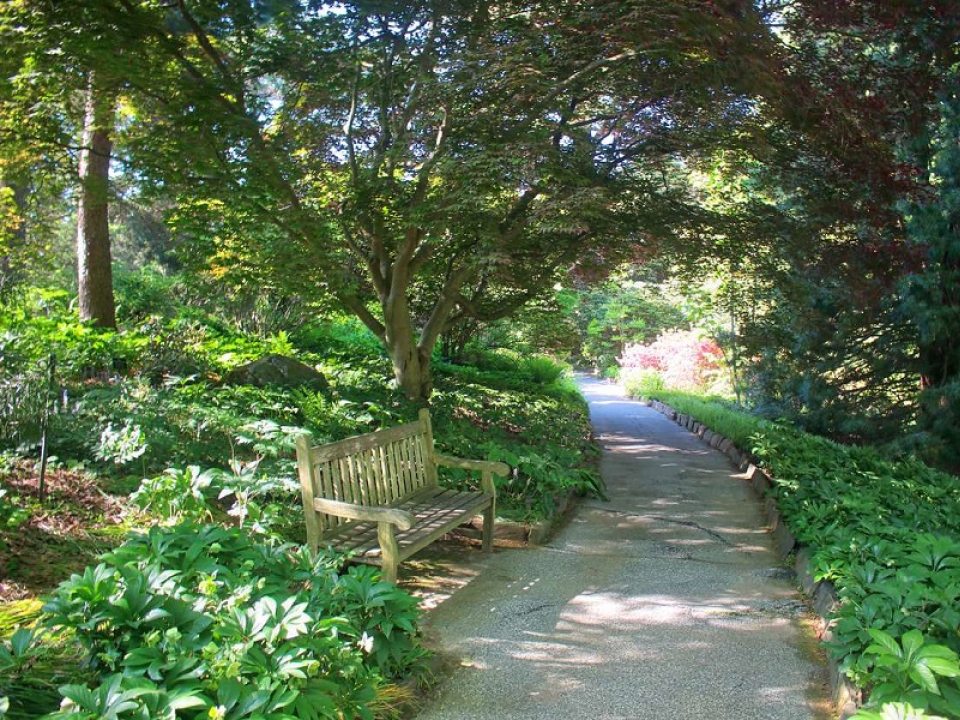
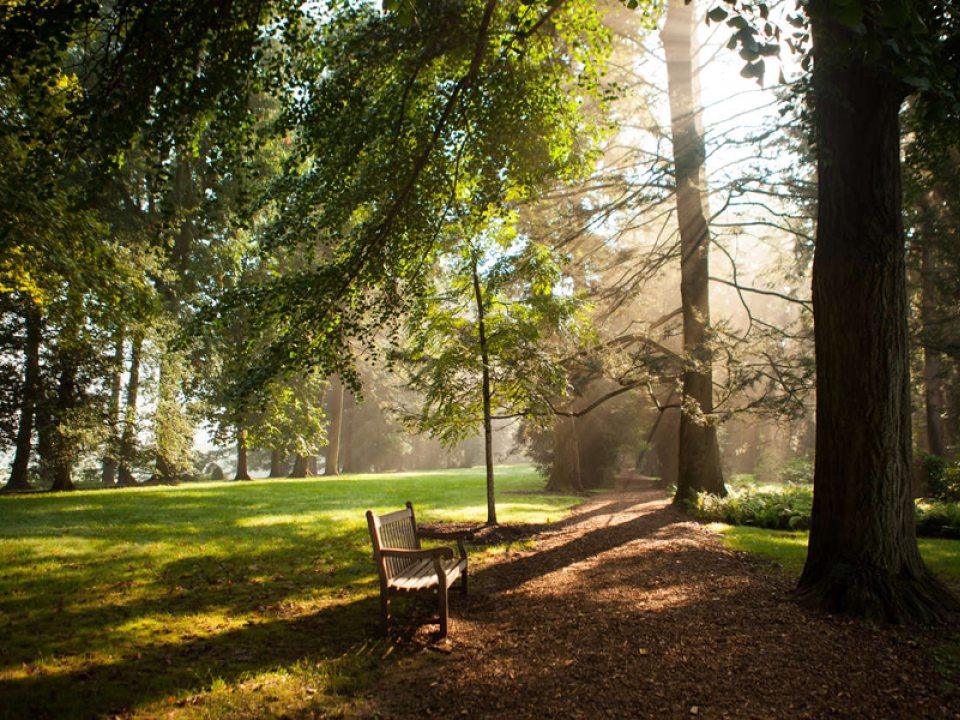
    sun shines through a line of trees on to a wooden bench sitting on path made of wood chips

    Peirce’s Park

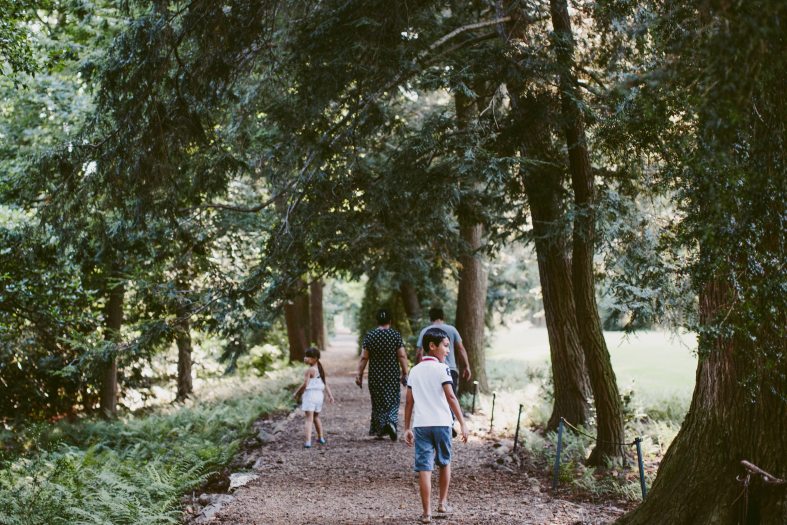
    Home to two notable allées of stately and spectacular trees, this area is where Longwood’s story begins. Enjoy woodland wildflowers and soaring tree specimens, many of which are more than 100 years old.

  • Peirce’s Woods
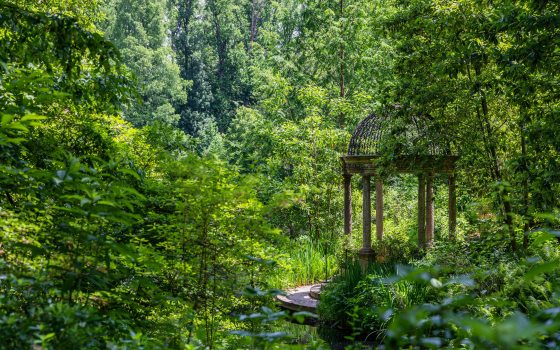
    A stone gazebo sits beside a small lake tucked into a forest of bright green trees

    Peirce’s Woods

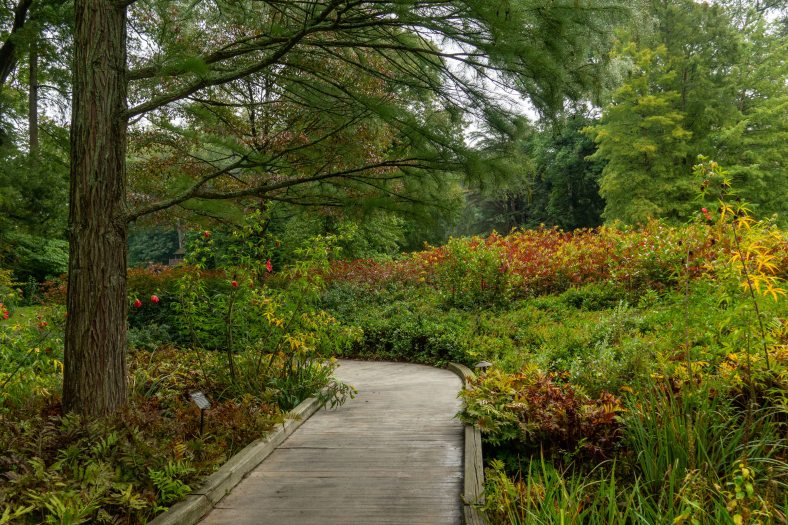
    This award-winning woodland garden, designed by W.Gary Smith, showcases mighty oaks, ashes, maples, and tulip-trees that tower over 200 species of native plants and cultivars, offering seasonal interest from spring through fall.

What’s in Bloom

  • Wild Bergamot

    Monarda fistulosa

    This native plant, like its garden counterpart, bee-balm (Monarda didyma), has tubular shaped fragrant flowers, ranging from pinkish purple to pale lilac, that are a favorite of hummingbirds and bees as well as a wide variety of butterflies. It is also grown for its showy flowers and for mint tea made from its aromatic leaves. It grow 2-4 feet tall in full sun or part shade and well-drained soils. In winter, the round, honeycomb heads of bergamot pods are one of the longest lasting seedpods in the Meadow.

  • Britton's-wild-petunia

    Ruellia simplex
  • Shrub with rounded flowers clusters of small red, orange and yellow flowers

    Lantana

    Lantana camara 'Radiation'
  • Shrub with purple flowers and green leaves

    Chaste-tree

    Vitex agnus-castus 'Shoal Creek'

    The chaste tree (Vitex agnus-castus) is a deciduous shrub or small tree in the mint family (Lamiaceae), known for its aromatic, gray-green leaves and showy spikes of lavender to violet flowers that bloom from summer into fall. Native to the Mediterranean region, it’s widely grown in warm climates for its ornamental value and its strong appeal to pollinators like bees and butterflies. Despite the name, the "chaste" tree has a long history of use in herbal medicine, once believed to promote celibacy. Today, it's appreciated more for its drought tolerance, graceful form, and extended bloom period in the landscape.

  • Broad, flat-topped compound yellow umbels (umbrella-shaped clusters) that can span up to 5 inches across, on erect tall stems.

    Goldspray

    Ridolfia segetum
  • Produces 4-inch, semi-double, daisy-like blooms with bright yellow petal edges that transition into a striking coppery-bronze or reddish inner ring. The center is a pronounced, dark chocolate-brown eye.

    Suncredible® Saturn™ Sunflower

    Helianthus Suncredible® Saturn™
  • Dense, feathery plumes in a vibrant flamingo pink.

    Celosia

    Celosia argentea 'Flamma Pink' 
  • Compact, uniform hybrid famous for producing large, rounded bright yellow blooms.

    Aztec Marigold

    Tagetes erecta 'Inca II Yellow'
  • Tiny, purple flowers along stem branches.

    Downy Skullcap

    Scutellaria incana

    Scutellaria incana, commonly known as hoary skullcap, is a native perennial found in open woodlands and prairies of the central and eastern United States. It features upright spikes of soft blue to violet flowers that bloom in mid-to-late summer, providing important nectar for bees and other pollinators. It's named “skullcap” because the shape of its small, helmet-like flowers resemble a close-fitting cap. The plant's gray-green, slightly hairy leaves help it tolerate dry conditions, making it a resilient choice for native plant gardens. With its quiet beauty and ecological value, Scutellaria incana is a great addition to low-maintenance landscapes. Deer-resistant