This week is National Pollinator Week, an annual event that celebrates pollinators, addresses the urgent issue of declining pollinator populations, and supports all we can do to protect them. Education is key when it comes to truly understanding the depth and breadth of the invaluable ecosystem services that bees, birds, butterflies, bats, beetles, moths, wasps, and flies provide us—and what we can do to help maintain their health and longevity. One thing you can do to support pollinator health in your own backyard is making informed, conscious decisions when planting. Here in Longwood’s Ornamental Kitchen Garden, we have a variety of edible flowers and plants that attract a diversity of pollinators and beneficial insects—and you too can create an ecologically rich garden in your yard that not only provides food for humans, but food for pollinators.
Some of the plants found in our Ornamental Kitchen Garden may seem more “ornamental” than “kitchen”—you may be surprised to learn that plants like bachelor’s-buttons are not only beautiful, but also edible, and pollinator-attracting. Often called cornflowers, bachelor’s-button (Centaurea cyanus) works well in full sun and reseeds freely, meaning they’ll come up year after year if you let them—and in turn provide valuable food and habitat for a host of pollinators, including bees, butterflies, and goldfinches.
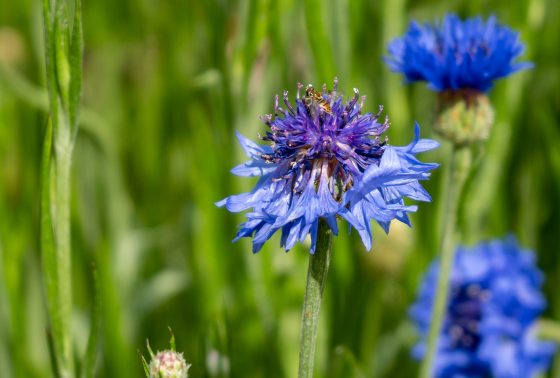
In addition to all of their pollinator-minded benefits, bachelor’s-button (Centaurea cyanus) petals can be used as edible flowers in your own cooking or baking. Photo by Carol Gross.
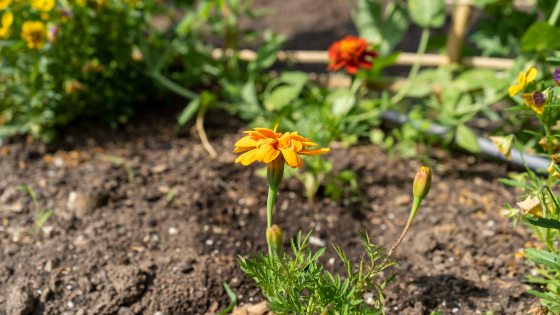
Bright, sunny marigolds (Tagetes spp.) also attract beneficial insects—with some single petal-layered varieties known to be easier for bees to access than double-layered flowers—and their petals are edible. Photo by Carol Gross.
Many members of the carrot family (Apiaceae or Umbelliferae) can be found in the Ornamental Kitchen Garden, and for good reason. Members of this family include celery (Apium graveolens var. dulce), fennel (Foeniculum vulgare), coriander (Coriandrum sativum), dill (Anethum graveolens), parsley (Petroselinum crispum), and many more. They’re also among plants that are typically not grown for their flowers, but if you let them flower, they will attract a variety of pollinators. Remember, though, the rule of thumb is if you are growing those plants for human consumption, be sure to harvest and eat them before they flower.
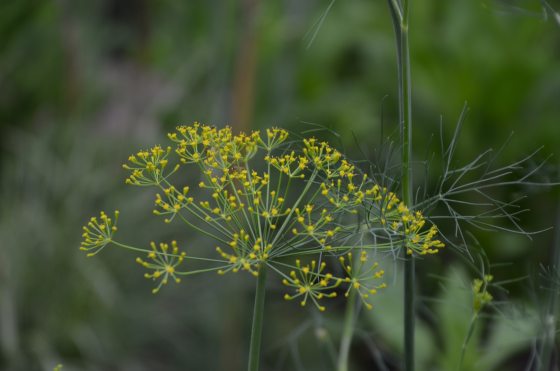
If you let members of the carrot family go to flower, dill (Anethum graveolens) (as shown above) and parsley (Petroselinum crispum) support swallowtail butterflies, and swallowtail caterpillars happily eat parsley leaves. You’ll also often find ladybug larva resting on carrot family plants. Photo by Amy Simon Berg.
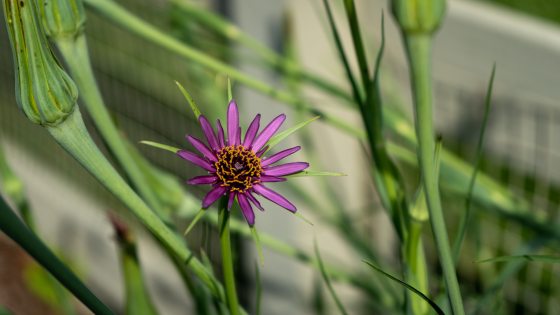
While salsify (Tragopogon porrifolius) is not a member of the carrot family, it also falls in the same category as supporting pollinators if you let it flower. If you overwinter this root vegetable, it will produce ornamental purple flowers in spring, along with its edible root. Photo by Carol Gross.
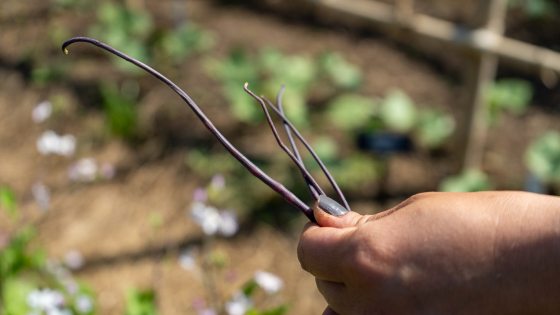
You can attract honeybees, hover flies, butterflies, and other pollinators in early spring with rat-tail radish (Raphanus sativus ‘Caudatus’). Grown for its seed pods, this spicy member of the Brassicaceae or mustard family is very low maintenance and packs quite a punch raw, pickled, or stir-fried as well. Photo by Carol Gross.
Pollinators also love herbs, as evidenced by the variety we grow here at Longwood. The tall, fluffy, purple flowers of breadseed poppy (Papaver somniferum), for one, are lovely in the garden, and are pollinated by bees.
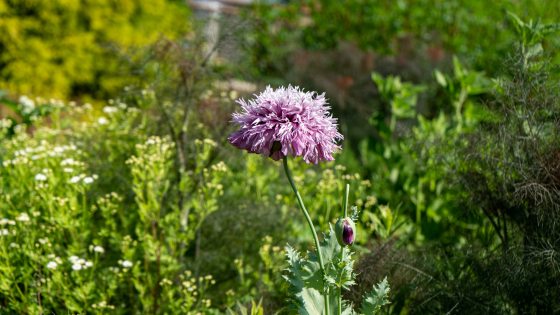
Breadseed poppy (Papaver somniferum) flowers can be used as cut flowers, while their light blue seeds provide a nutty flavor. Photo by Carol Gross.
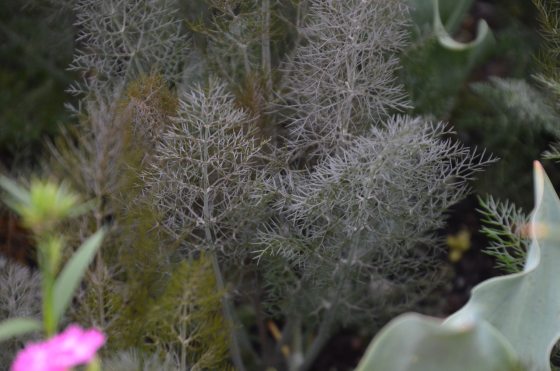
Bronze fennel (Foeniculum vulgare ‘Purpureum’) sits happily throughout our garden, adding visual contrast with its fun texture, feeding swallowtail caterpillars and butterflies, and producing many edible pieces, as all parts of the plant, from the stem to the leaves, seeds, and roots are all edible. Photo by Amy Simon Berg.
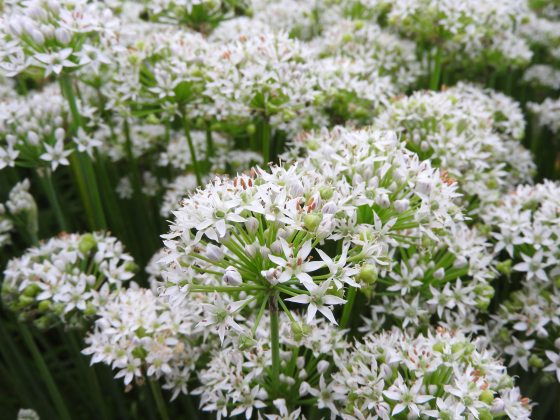
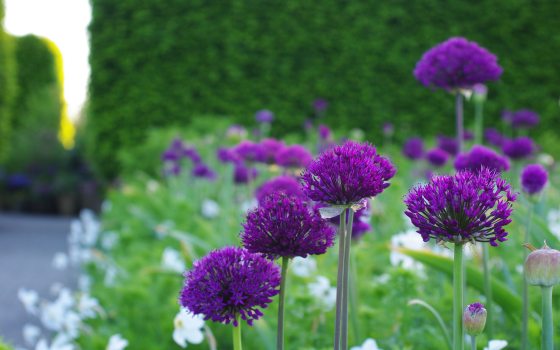
Garlic chives (Allium tuberosum) make for a fantastic addition in an herb garden, thanks to their perennial white flowers that are very often covered by pollinators, as well as their strong garlic flavor despite their chive-like appearance. Photo by Cathy Matos.
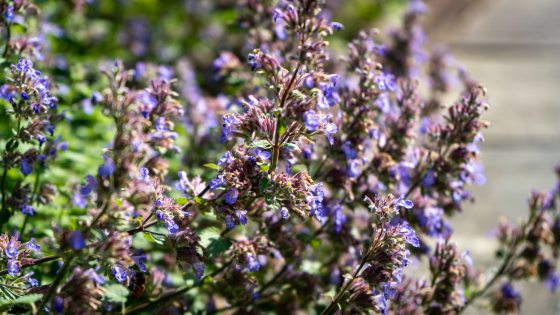
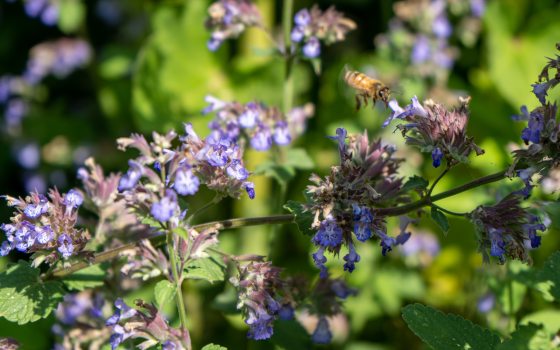
An aromatic and commonly grown herb, catmint (Nepeta spp.) is an easy-to-grow selection that boasts lavender blue flowers that not only attract cats, but also moths, bees, butterflies, and hummingbirds. For people, catmint’s leaves and flowers can be steeped by make an herbal tea with a mild minty flavor. Photo by Carol Gross.
These plants are just a few of the many, many pollinator-friendly selections that can be easily incorporated into an ecologically diverse edible garden. Gardeners who include plants for bees, butterflies, birds, and other pollinators not only create an important habitat for these species, but often enjoy a greater bounty come harvest-time, thanks to our pollinator friends.