As summer begins to wind down in the Annual Corridor, it may seem a little early to be thinking about spring. After all, our Gardens are still overflowing with color, with many of our summer annuals at the height of their display. Yet for gardeners hoping to enjoy a spectacular spring display, now is the time to start planning, as some of the most memorable and abundant spring gardens are set in motion in the late summer and fall months, long before they bloom. Continue reading to see how we prepared for a spectacular spring display this past year in the Idea Garden, and how you can do the same at home, starting this month.
At Longwood, fall is typically the time of year we take out summer annual displays and plant spring-flowering bulbs in preparation for spring. That level of preparation also holds true with some more seldom-used spring hardy cool season annuals, which are flowers that can be sown in summer to early fall the prior year, giving them plenty of days of cool fall temperatures to get established before a deep freeze in winter. Their spring success depends on being able to establish strong root systems during the cooler days of autumn.
This past spring of 2026, an area of the Idea Garden showcased a variety of mid-to late spring Narcissus, Alliums, and seed-sown hardy annuals to help bridge the gap while other nearby areas were being replanted for summer in early May.
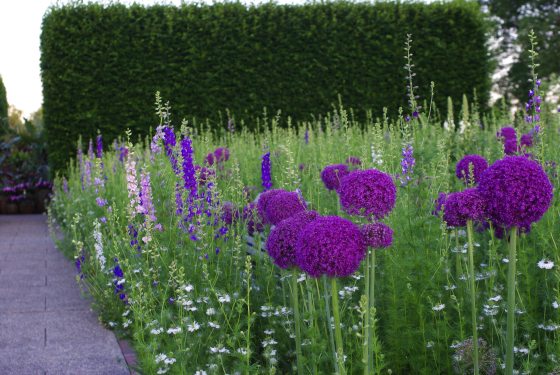
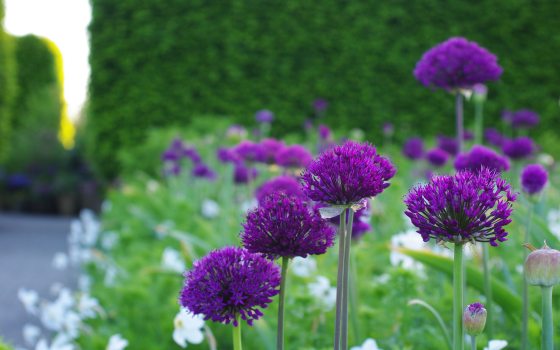
Allium ‘Ambassador’ leads the way in this late May 2026 photo. Photo by Patrick Greenwald.
The display featured a spectacular mix of Consolida ajacis ‘Lilac Spires’ (Rocket Larkspur), Nigella damascena ‘Miss Jekyll White’ (Love-in-the-Mist), Verbascum olympicum album (White Mullein), Allium hollandicum ‘Purple Sensation’ (Ornamental Onion), Allium ‘Ambassador’ (Ornamental Onion), Narcissus poeticus (Poet’s Narcissus), and a few gorgeously random Papaver rhoeas (Corn Poppy), which are my idea of the perfect amount of imperfection.
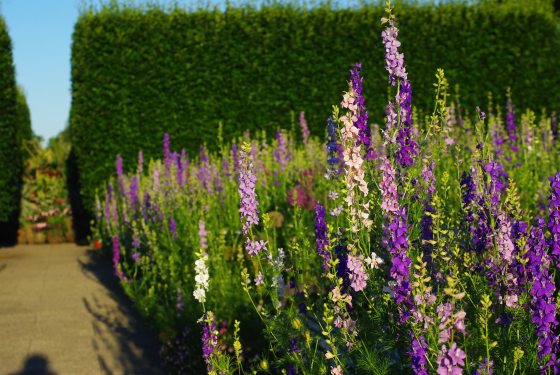
I’ve heard Rocket Larkspur referred to as “floral fireworks” by an admiring guest, and for the display of Rocket Larkspur ‘Lilac Spires’ in the Idea Garden this past June, that was certainly the case. Photo by Patrick Greenwald.
To achieve this display, we prepared the garden space for planting in late September 2025. For those looking to create a similar display for spring 2027, you can follow this recipe for success starting at the end of September 2026.
First, in the last week of September we prepared the garden space for planting. Here at Longwood that included taking out summer annuals, turning over the soil with shovels, and finally tilling the soil.
Next, we planted our desired spring bulb layer. We chose later-blooming Alliums and Narcissus for a desired May bloom time, but earlier blooming bulbs can be added as well. Alliums and Narcissus have an added benefit of typically being avoided by winter-foraging wildlife such as rabbits, deer, and squirrels, in contrast to tulips, which are loved by all of the above. After planting the bulbs two to three times the diameter of their bulbs deep in the soil, the garden space was raked smooth.
Next, the hardy spring annual mix was sown across the prepared garden space. For example, for the 1,500-square-foot Idea Garden space, we mixed 2 oz of Love-in-the-Mist ‘Miss Jekyll White’ seeds and 1/4 lb. Rocket Larkspur ‘Lilac Spires’ with 4 to 5 gallons of moistened sand. The sand acted as a carrier, adding bulk to the seed mixture so that the seed was evenly distributed across the entire garden space. Make sure that the seed mixture is a winter hardy cool season annual to the region. Love-in-the-Mist and Rocket Larkspur can easily survive our cold winter temperatures. Some spring annuals in comparison, such as Corn Poppy, are typically best sown in the late winter after extreme cold has passed.
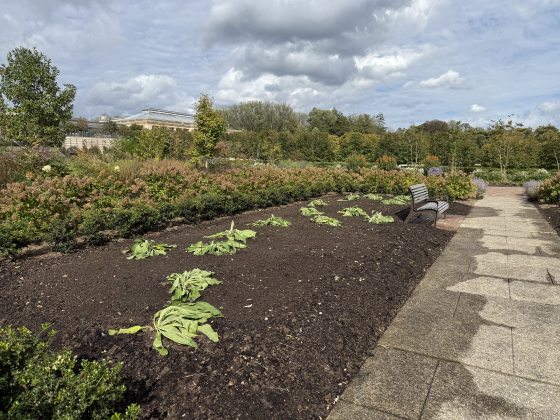
The Idea Garden space in October 2025 after planting bulbs and seeding the hardy annuals. Photo by Patrick Greenwald.
The Rocket Larkspur ‘Lilac Spires’ seed needed light to germinate, so I only lightly raked in that seed to the soil surface. The opposite was true for the Love-in-the-Mist ‘Jekyll White’, which needed darkness. For the Love-in-the-Mist, I sprinkled just a little finely sifted leaf compost over the seeds to provide a little cover for a percentage of the seed without shading out the Rocket Larkspur too much.
With the combination of cool evening temperatures (a requirement for germination) and daily surface watering (sometimes two times a day if temperatures were warm and sunny) to keep the seed bed moist, first the Rocket Larkspur ‘Lilac Spires’ germinated and the Love-in-the-Mist ‘Jekyll White’ followed.
By Thanksgiving the frosty ground was covered in tiny seedlings, which by January had formed a nice green carpet over the ground. As a bonus, these seedlings formed a winter cover crop, protecting the soil surface from erosion and winter rain damage.
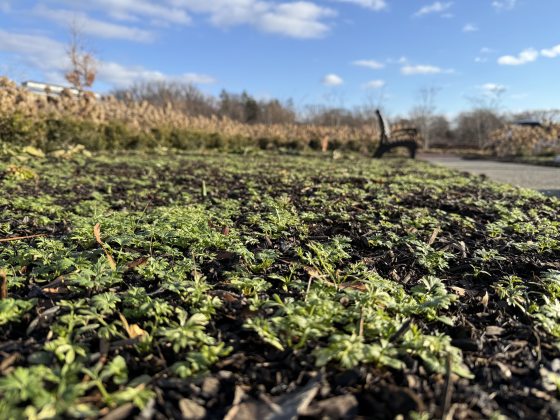
This January 2026 photo shows the winter hardy annual seedling carpet that had established, protecting the soil surface from erosion and winter rain damage. Photo by Patrick Greenwald.
Depending on the weather during the fall season, the amount of time seedlings have to develop may vary depending on when the cold temperatures arrive. It may be beneficial to plant the seeds a week or two earlier in September just in case winter arrives early. Also keep in mind that these seeds need cool temperatures to germinate, and they most likely will not germinate quickly if summertime temperatures linger in late summer and early fall.
By mid-April, warm temperatures encouraged the robust carpet of hardy annuals to send up spikes of developing flower buds. But with a cool start to the beginning of May, everything slowed down, allowing first the Narcissus to bloom in mid-April followed by the Poet’s Narcissus in early May.
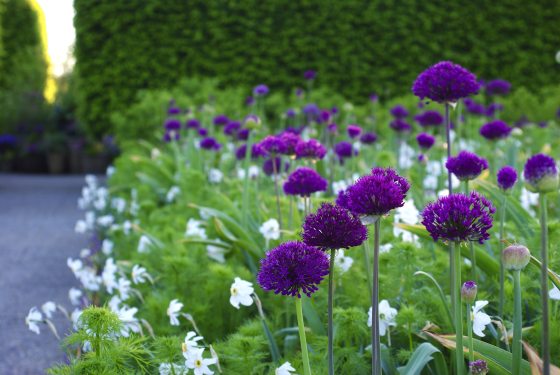
Allium ‘Purple Sensation’ (Ornamental Onion) and Narcissus poeticus (Poet’s Narcissus) in early May 2026. Photo by Patrick Greenwald.
Next, A. ‘Purple Sensation’ (Ornamental Onion) and A.‘Ambassador’ (Ornamental Onion) finished off the month of May. It wasn’t until the last week of May that the hardy annuals stole the show and then peaked the second week of June, By planting spring hardy annuals, we extended our display until the third week of June, in comparison to a spring bulb display which would finish by mid-May.
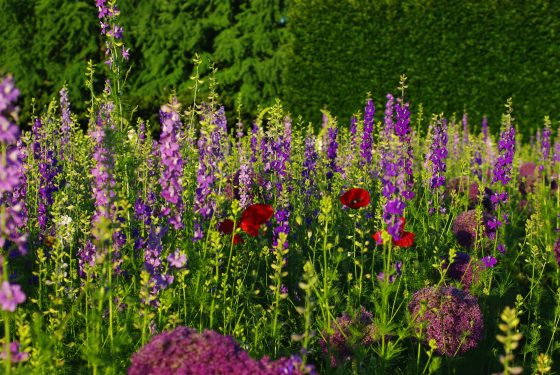
As the Ornamental Onion faded, Rocket Larkspur stole the show in early June 2026. Photo by Patrick Greenwald.
Challenge yourself by adding fall-sown hardy spring flowering annual flowers to your garden, and you too can crack the magical code behind a gorgeous late spring display. Stay tuned for next spring’s new mixture of hardy annuals that we will seed this fall, in a rainbow of colors. This vibrant display will surely bring joy to those who visit the Idea Garden in May, when other display beds are in transition.