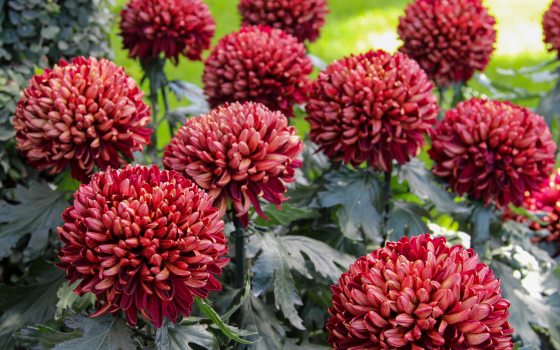
From intricate specialty forms to the spectacular Thousand Bloom, our annual Chrysanthemum Festival is the beautiful result of more than a year of planning, growing, training, and collaboration. Long before the chrysanthemums burst into bloom, our horticulturists are carefully growing, shaping, and training thousands of plants while working alongside designers, carpenters, metalworkers, and many others across the Gardens. Together, these teams transform living plants and imaginative ideas into one-of-a-kind displays that make Chrysanthemum Festival so spectacular, all while honoring and preserving an Asian artform. This year, we’re thrilled to bring back beloved favorites while introducing exciting new additions throughout the Main and East Conservatories. Here, we share a glimpse into the incredible time, skill, creativity, and teamwork that go into bringing this beloved display to life—and the stunning features you won’t want to miss.
One of this year’s new additions began with something that may be unexpected: a stone. Japanese viewing stones, known as suiseki, are naturally occurring stones admired for their unique shapes, textures, and forms. Traditionally featured alongside our bonsai exhibitions, these stones can serve as a source of inspiration for horticultural and artistic displays. This year, the distinctive double peaks of a viewing stone in Longwood’s collection became the inspiration for three new, large-scale chrysanthemum forms in our Exhibition Hall.
Designed to echo the stone’s shape, these new forms resemble towering rocks and are completely covered in chrysanthemums. Bringing this vision to life required careful attention to the plants’ growth and form, allowing the chrysanthemums to gradually fill the structures and take on their distinctive shape. The result is a living interpretation of the original stone where horticulture and design come together to create something new. The inspiration and chrysanthemum form are displayed side by side, with the original viewing stone on a pedestal near the chrysanthemum forms, inviting guests to discover the connection between the two.
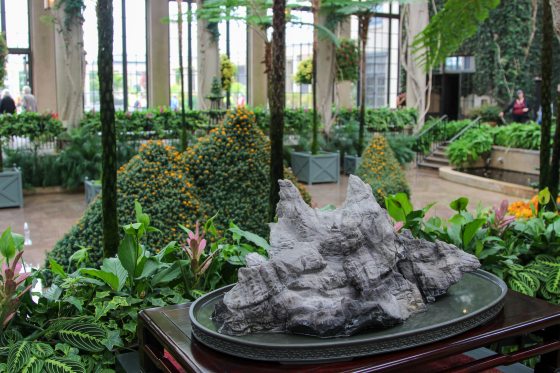
The viewing stone, or suiseki, our chrysanthemum forms are modeled after, in our Exhibition Hall. Photo by Meghan Siano.
Another first for this year’s Chrysanthemum Festival is the addition of chrysanthemum pagodas to the Fern Floor in our Exhibition Hall. Normally displayed in the parterres, the pagodas are taking on a new role this year as part of that space’s landscape, appearing alongside the chrysanthemum stones. Their placement adds another layer of detail to the space, allowing these familiar forms to interact with their surroundings in a completely different way. Rather than standing on their own, the pagodas become part of a larger composition that encourages guests to look closely at the relationship between the plants, structures, and the surrounding landscape.
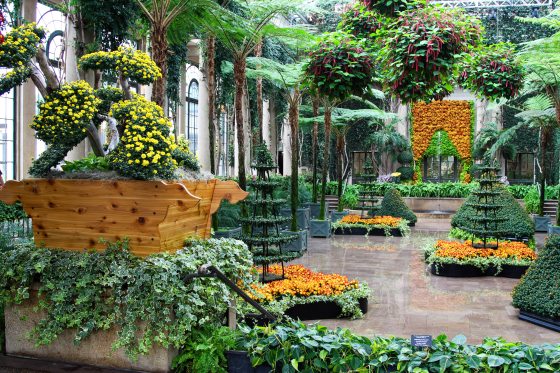
A landscape of chrysanthemum pagodas to chrysanthemum viewing stone forms, on display in our Exhibition Hall. Photo by Meghan Siano.
On the Patio of Oranges, a new double arch rises more than 14 feet tall, inviting guests to walk beneath its impressive form. The arch features the ‘Gum Drop’ cultivar, selected for its vigorous growth and ability to thrive in this spectacular design. Composed of eight interlocking sections that fit seamlessly together, this remarkable structure is one of the largest forms featured in the display.
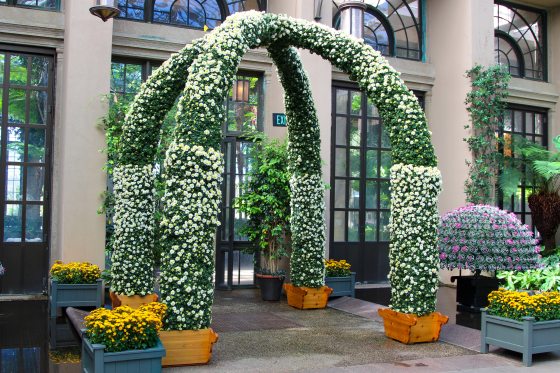
Standing over 14 feet tall, the double arch on the Patio of Oranges features Chrysanthemum × morifolium ‘Gum Drop’. Photo by Meghan Siano.
Alongside this year’s new forms, many familiar Chrysanthemum Festival favorites are making their return. Throughout the historic conservatories, you’ll find an array of distinctive forms, including arches, spirals, baskets, clouds, mum curtains, fans, tree forms, and more—in fact, there are an astounding 74 trained forms throughout this year’s display! Each brings its own shape, scale, and character to Chrysanthemum Festival, creating a display that is full of character. New this year, don’t miss our waterfall form, located at the East Conservatory entrance.
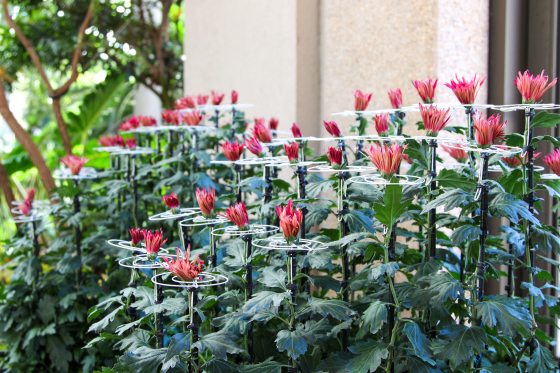
This year’s new waterfall form, found near the East Conservatory entrance. Photo by Meghan Siano.
Even when a familiar form returns, it is never quite the same. Different chrysanthemum cultivars, colors, sizes, and growing conditions allow our horticulturists and designers to reinterpret these forms each year. A familiar form might take on a completely different appearance with a new color palette, or can change dramatically depending on the cultivar and how it was trained and shaped. All our forms showcase the remarkable versatility of chrysanthemums and the years of skill, patience, and creativity it takes to transform a single flower into living sculptures of so many different shapes and sizes.
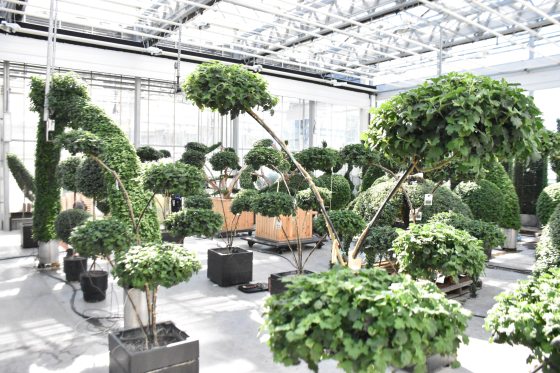
Our beautiful cloud chrysanthemum forms take shape, as shown in this August 2026 photo taken in our nursery. Photo by Grace Sisofo.
Among these living sculptures is one of the display’s most iconic features: the spectacular Thousand Bloom, a horticultural masterpiece that takes approximately 18 months to grow and train, requiring great patience, precision, and careful attention. Utilizing a centuries-old technique in which a single-stem chrysanthemum plant is grown and trained to produce as many perfectly placed blooms as possible, the Thousand Bloom reaches approximately 12 feet wide and 10 feet tall. Its size and blooms are no exaggeration: this year’s Thousand Bloom features 1,355 individual flowers.
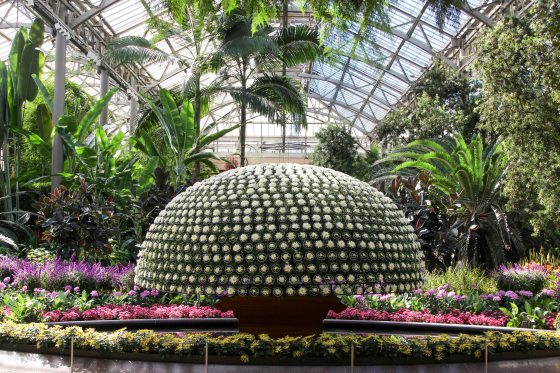
Our Thousand Bloom Chrysanthemum is a 1,355-bloom showstopper. Photo by Meghan Siano.
Nearby, guests can observe a specially crafted half-dome, a teaching tool to help give a rare look beneath the flowers while seeing the intricate framework that made it possible, as much of the technique is hidden once the Thousand Bloom is fully covered in flowers. By seeing this cross-section, guests can better understand the remarkable transformation that takes place over 18 months and just how much horticultural skill goes into creating one of our Chrysanthemum Festival’s most iconic features.
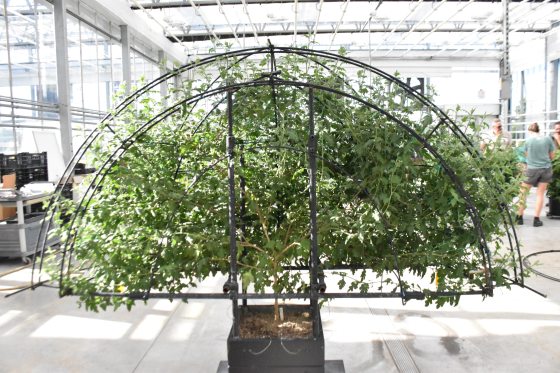
Our specially crafted half-dome, in progress, as shown in this August 2026 photo. Photo by Grace Sisofo.
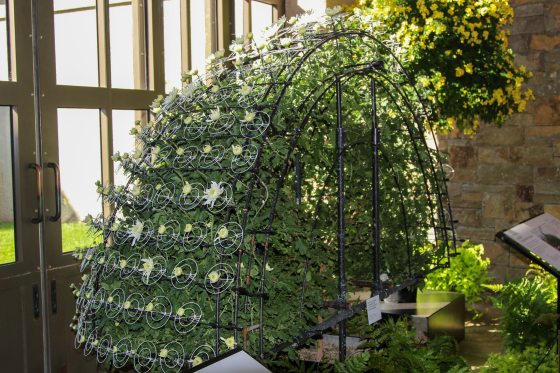
Our completed half-dome, on display in the East Conservatory. Photo by Meghan Siano.
Beyond the half-dome, there are plenty of opportunities to explore the art and science behind our chrysanthemums and how we create the specialty forms and exhibition chrysanthemums for display. Near the Green Wall in the East Conservatory, discover our display that delves into the art and science, as well as introduces the 13 classifications of chrysanthemums and the incredible diversity of forms.
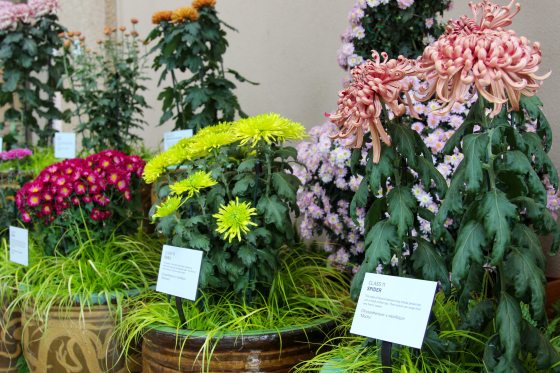
View beautiful representations of each of the 13 classifications of chrysanthemums near our Green Wall. Photo by Meghan Siano.
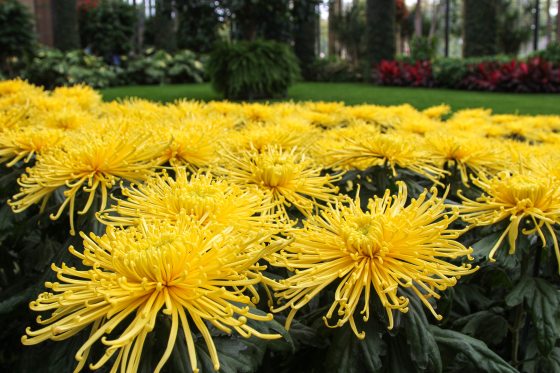
In addition to training chrysanthemums into forms, our experts have grown exhibition chrysanthemums for the beds in our Main and East Conservatories, shaping each plant by hand along the way. Photo by Meghan Siano.
In addition to 73 specialty forms and more than 5,800 pots of chrysanthemums we grew for this year’s display throughout our historic conservatories, you can discover more expressions of horticultural artistry throughout the Gardens. In the Bonsai Workshop, enjoy Tanuki Bonsai, a technique that combines living plant material with weathered deadwood to create the appearance of a single, naturally aged tree. Here, we’ve paired this artform with Japanese viewing stones from our collection. In the Peirce-du Pont House Conservatory, experience a variety of vibrant “gnome” chrysanthemum bonsai, known for their compact size, small leaves, and flowers.
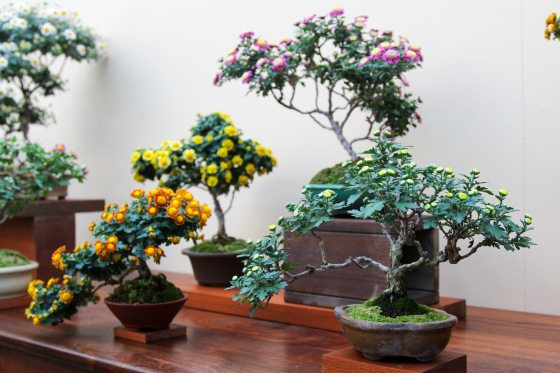
A selection of our chrysanthemum bonsai featured in the Peirce‑du Pont House Conservatory. Photo by Meghan Siano.
All of this is just a fraction of what you’ll experience with Chrysanthemum Festival, our one-of-a-kind display that showcases horticulture, design, and craftsmanship coming together in spectacular ways.