At Longwood Gardens, our work has always been rooted in the future. When founder Pierre du Pont purchased the farm that would become Longwood Gardens in 1906, he did so for a straightforward but powerful reason: to save its trees. That act of stewardship established a legacy that continues to guide us today. More than a century later, the challenges facing gardens and landscapes have changed. Climate change is reshaping ecosystems, growing conditions, water resources, and biodiversity around the world. As a public garden committed to excellence in horticulture, conservation, education, and innovation, we recognize both the responsibility and the opportunity to help address those challenges. As our Environmental and Sustainability Engineer, it’s what I focus on every day; Longwood’s culture of stewardship provides the foundation that enables me to direct my 40+ years of environmental engineering experience to helping address climate-related challenges. With that, we are pleased to share that Longwood Gardens has joined the Climate Toolkit, a collaborative network of more than 275 museums, gardens, zoos, science centers, and cultural institutions working together to advance meaningful climate action.
Led by Phipps Conservatory and Botanical Gardens in partnership with the American Alliance of Museums, American Public Gardens Association, Botanic Gardens Conservation International, Association of Science and Technology Centers, and Organization of Biological Field Stations, the Climate Toolkit offers a structured way to identify priorities, measure progress, share knowledge, and learn from one another. More than 275 institutions in 30 countries, collectively reaching over 136 million annual visitors, currently participate. By joining, we are strengthening our commitment to environmental stewardship while contributing our expertise.
Regionally, climate change is reshaping growing conditions, water cycles, seasonal patterns, and ecosystem health. For a public garden, the impacts of climate change are not abstract. They affect the plants in their collections, the natural lands surrounding their formal gardens, and the decisions their horticulturists, scientists, educators, and facilities teams make every day.
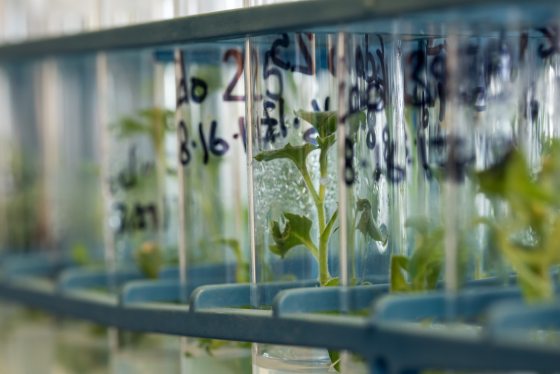
Longwood is the steward of a living plant collection that contains more than 13,000 taxa. Here, young chrysanthemums grow in test tubes in Longwood’s tissue culture laboratory. Photo by Hank Davis.
Currently, the Climate Toolkit focuses on 35 goals for addressing climate change within nine categories: ecological restoration and landscapes, research, engagement, buildings and energy, water, food service, transportation, waste, and investments. However, the Climate Toolkit is much more than a list of goals. It provides resources, working groups, webinars, and opportunities for institutions to select priorities suited to their missions, share practical experience, and make their progress visible according to their missions and circumstances.
While our joining the Climate Toolkit marks an important milestone, much of the work outlined in the Climate Toolkit is already underway at Longwood—with much more to come. From Pierre du Pont’s original effort to protect trees from logging to our acquisition of the 505-acre Longwood at Granogue property to preserve one of the last remaining unprotected pieces of open space in the Brandywine River corridor, protecting natural landscapes remains central to our mission. Today, Longwood stewards 1,700 acres of forests, meadows, wetlands, and cultivated landscapes, while improving biodiversity throughout the region.
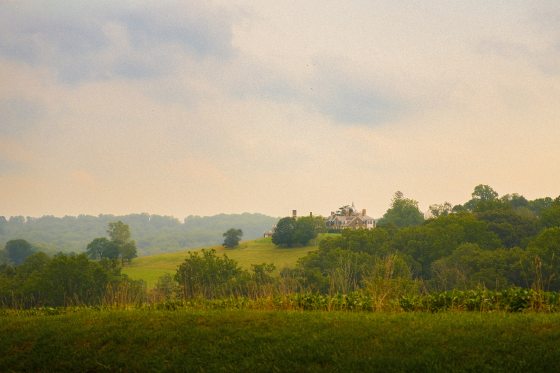
Expanding upon its ongoing commitment to conservation and environmental preservation, Longwood Gardens acquired Granogue in 2024 to conserve one of the last remaining unprotected pieces of open space in the Brandywine River corridor. Photo by Holden Barnes.
Over the last several decades Longwood has been systematically restoring ecological habitats (including reforestation projects and wetlands creation), and planting and encouraging the growth of native species, while removing and controlling invasive species. Longwood Gardens and Longwood at Granogue are managed to restore biodiversity, protect habitat, improve resilience, and safeguard waterways connected to the Red Clay Creek and Brandywine River watersheds.
As we continue to grow, we have been expanding the use of electric equipment and vehicles across our operations. Our fleet of trucks, cars, carts, vans, buses, and tractors includes approximately 200 vehicles, with approximately 80 electric carts accounting for more than one-third of the fleet. Each gallon of gasoline or diesel fuel saved by using electric carts reduces our annual greenhouse gas emissions by approximately 20 pounds. In addition to transitioning to electric carts, we have been transitioning to smaller and more fuel-efficient gas- and diesel-powered vehicles. This helps reduce emission while supporting the daily care and operation of our Gardens.
Longwood Gardens derives all its electricity, excluding backup generators, from 100 percent clean renewable sources. Our 10-acre onsite solar field supplies approximately 30 percent of our annual electricity needs. The balance of our electric power is purchased as clean renewable. Recent projects completed as part of Longwood Reimagined exceed current energy-efficiency standards and incorporate a wide range of energy-saving measures including geothermal heating and cooling, earth ducts, automated ventilation, and high-efficiency glass.

Annually, the solar fields produce approximately 2 million kilowatt-hours—about 30 percent of our yearly energy consumption. Photo by Daniel Traub.
Our living collections are both a cultural resource and a reservoir of biological diversity. Their future depends on understanding climate-related risks and adapting our stewardship accordingly. We are preparing a comprehensive Climate Change Adaptation Plan focused on our living collections, beginning with our trees. Grounded in data, risk assessment, and performance evaluation, the plan guides long-term decisions about collection development, garden planning, planting, care, and conservation. Trees provide shade, store carbon, support wildlife, protect soil and water, and help define the Gardens. Evaluating their vulnerability now will strengthen the resilience of our collections and landscapes for generations to come.
We’re currently advancing many of the goals outlined by the Climate Toolkit. One area of advancement is water stewardship. Enhanced treatment capabilities in our sewage treatment plant, along with dedicated plumbing in our new and refurbished spaces, allow the use of treated effluent for toilet flushing. This reduces the volume of water required from our public water supply system. We have also begun harvesting stormwater runoff from the new West Conservatory and The Grove administration building, treating and repurposing it for irrigation and select water features across the Gardens.
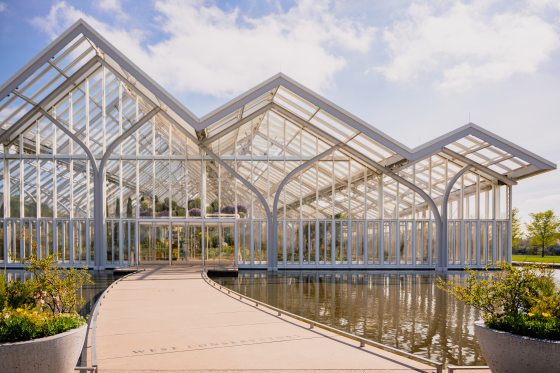
From a state-of-the-art ventilation system to underground rainwater-collection tanks, every technical aspect of the West Conservatory continues Pierre S. du Pont’s commitment to engineering innovation. Photo by Holden Barnes.
Joining the Climate Toolkit is an important milestone, but its true value lies in the work ahead. We will continue developing our adaptation plan, advancing our selected goals, evaluating progress, and sharing what we learn as we work towards a more resilient future.
Longwood's mission calls us to bring joy and inspiration to everyone through the beauty of nature, conservation, and learning. In a changing climate, it also calls us to care for the landscapes and collections entrusted to us. By joining the Climate Toolkit, we are strengthening our commitment to a future informed by science, sustained by collaboration, and rooted in the enduring power of plan. As the Climate Toolkit reminds us: “It must be us. It must be now.”